A. F. Grappin
  • Home
  • About Me / Patreon
  • Library
  • Writing Samples
  • The Chain Nerd

What would you tell a child who wants to be a writer?

11/10/2025

0 Comments

 
I was very fortunate to have gotten bitten by the writing bug at a fairly early age. I’ve talked about this a bit before. It was early middle school when it happened, so around age 11. By age 12, I was definitely mired in the written word. It was pure fortune that even though my writings were TERRIBLE, I got a lot of good support from the people whose opinions I cared about.
To be fair, at the time, I didn’t really know how bad they were. I read, yes, but I was not introspective, subjective, or anything like that. I was just having fun. And to be completely honest, that’s what writing should be.
It should be fun.
More than anything, that’s what I would (and do) tell children who want to be writers. Both of my goddaughters are artistic in some sense, and both do dabble in some writing. One of the first things I was proudly presented by one of them (a few years ago now, so the author was roughly age 8 or so) was— and I say this affectionately— the most derivative, poorly-written fanfiction I could imagine. The first half or so was pretty much just a written Cliff’s Notes version of the film they were “based off.”
I speak that openly about it because at this point, I know my own early writings were no different. I’ve already posted on this blog about some of the first works I recall: The Kung-Fu Cockroaches being one I particularly have in mind. It was derivative and more poorly-written than I care to claim these days. The support I got for it was encouragement, excitement over having written a thing, though… looking back, of course I never got any good actual feedback. But what do you tell a preteen who has the guts to put themselves out there like that?
The same thing you should tell anyone trying something new: that you know how hard what they’re doing is. You praise the effort, the passion, and the courage to do it. You acknowledge the hard work they’ve put into it, because effort is what’s going to help them improve.
With any skill, you get out what you put into it. You have to invest. For a child, it’s much simpler than trying to actually guide the improvement. Don’t criticize their word choices, plot, characters, any of that. You don’t have to lie about things being good. Praise the effort they put into it. Tell them to keep writing. ASK WHAT THEY PLAN TO WRITE NEXT.
Frankly, this goes for adults, too, and not just in writing. Any skill someone is trying for the first time, just encourage it. It doesn’t have to be super deep encouragement that analyzes what they do. If someone’s playing tennis for the first time, focus on the fun and immediate benefits. Be happy because they’re trying something new, not that they’re not already Pete Sampras or not making money off it. If your mother decides to take an airplane pilot simulation course, don’t shake your head and make it clear you doubt she’ll ever fly a plane.
You have nothing to lose and everything to gain by being positive and supportive. Even if that preteen spends the rest of their life writing and NEVER PUBLISHES ANYTHING, don’t stop encouraging. The sum of our skills is not based on how much money we make off something. It can and should be valued in the joy we get creating or doing a thing.
And if they never want to share them with the greater world, never publish their art, never play a game competitively, that’s not a “waste” or a “pointless practice.”
In short, there really is no reason to not encourage others’ hobbies. And it’s not that hard to be genuine about it. If something makes a person happy, focus on how happy they seem to be doing the thing. You don’t have to like or even approve of what they do, but… don’t be the reason someone stops doing something they enjoy.
Especially if it’s a child.
0 Comments

The Handmaid's Tale by Margaret Atwood (Book Review)

11/5/2025

0 Comments

 
This being the first of the book reviews I’ve done in quite a while, I suppose I should clarify what my intentions are with them. In the past, I have written book reviews mostly with the intent of supporting author friends. I see no reason why I shouldn’t continue to support authorly friends, so if you have a book you’d like me to read and review for you, please contact me. I will warn that physical reading take a lot longer for me these days. Audio is better, mostly because of time and attention constraints. I have drive time that I can dedicate to listening where I can’t read a physical book while doing that. That’s a good 5 hours a week just listening to books. I also listen while cleaning, eating, cooking, that sort of thing. I can try physical reading again too, so please don’t let that deter you if you want my thoughts on your work.
I digress, as I so often do. What I intend with these book reviews: my own thoughts, such as they may be. Sometimes, it may be a lot of focus on plot and character. It could be on craft, voice, even setting. Knowing me, a lot will just be general thoughts. Anyway, in short, just know that I read widely and enjoy talking about books in general. So expect that from these reviews.
_________________________
This is not a first impression of The Handmaid’s Tale. No, I first listened to this audiobook probably 10-ish years ago. But I just finished a re-listen and it was better than I remember. And I remember liking it a lot then. That said, here are my thoughts on it as it sits fresh on my mind.
Atwood writes beautifully. Simply put, it’s wonderful prose that, at least in my opinion, perfectly encapsulates the protagonist’s mindset. It isn’t until the epilogue that we discover this story was “discovered” as a series of audio cassettes, but that one revelation makes the whole thing make so much more sense to me, from a technical standpoint. The fact that I have absorbed it through audiobook only drives that further home. The delivery of the version I have, read by Claire Danes, truly feels like half of a conversation, like the oral passing down of stories from elder to child a generation or two removed.
That’s what so much of this feels like to me: like a story told, not one written. Obviously I don’t know if Atwood intended that to be its format from the beginning, or if it came along during the process somewhere, but I like to believe it is intended to be heard more than read, in general.
I’m writing this on October 13, 2025 in the United States, and it goes without saying that this book very much hits hard right now. It’s well-documented that Atwood took a lot of inspiration from Orwell’s 1984, another dystopian fascist novel. It’s far too clear to see the parallels in Atwood’s prose and the current living situation of every human demographic other than rich, white, male Evangelical. What’s even more terrifying is that the things Atwood describes not only could happen, they are happening in the U.S. even as I type this. Speaking as someone who falls into a number of minority categories (being trans for one), it really struck my nerves and fears in a way it didn’t ten years ago.
What Atwood really nailed, at least to my listening this time through, is all the small ways so many people break the rules. The intense strictures of everyday life in the Republic of Gilead are no way for people to live. Even those who benefit from the rules know that. Even they: the Commander, Serena Joy, the aunts, they all have their own small breaks that give them more reason to go on. The Commander with something as simple as playing Scrabble, one of the Marthas (I forget which one, Rita maybe) cutting radishes into rosettes and other shapes, all the people with cigarettes, mentions of the black market, all these things build up. They are proof of humanity’s survival and constant desire to be more than a basic nothingness.
Yet somehow, Atwood always managed to capture the sense of hope. Hope buried, lost, found again, shared, kept, coveted, reveled in. Even at its darkest moments, those where the writings and rules of the government of Gilead are at their worst, Offred and other characters demonstrate that they are still people. At their basest, most primal state, they are still people with wants and needs and the drive to find ways to survive and achieve those wants. Something as small as a single match hidden in a bed frame is a symbol of something strong waiting to break free.
I can’t help but compare it to another media tale of “the beforetimes” transitioning to the current horrific situation, told in a horrid way from one sufferer to the next: Valerie’s autobiography in V for Vendetta. The single match being hope, Valerie’s “one inch” being the last thing that cannot be taken from us.
Seeing the country I grew up in turning into a world where threat of my being disappeared is very real makes those small hopes mean a lot more. That one inch of self is critical. That one shred of being unapologetically who you are, in whatever small ways you can, is a valuable way to fight back. It might not be a lot, but then, it might be everything.
0 Comments

The rules of writing: Break them or keep them?

6/16/2025

0 Comments

 
This is very much a topic I have a lot of words about, but the thing is, and I will say this in all caps:

THERE ARE NO RULES OF WRITING

Okay, that’s being facetious, but the thing is, writing is an art form, same as other art forms like physical art, digital art, dance, music, all that. I mean, the whole point of art is that it is interpreted in the eyes and heart of each individual. Everyone ingests all arts differently, so there is truly a whole lot of fuzziness in creating art.
That said, there is one big difference between writing (and other spoken media like theatre) that is a limitation, and obviously it’s what I’ve already hinted at: language itself. Naturally, being able to express a thought and have it be understood in language is a great gatekeeper for writing itself. Rather than have this post be a treatise on language (I realized I’m going totally technical-autistic and really getting into the bare bones foundation of language, which is where I don’t want to be), let’s just acknowledge that basic fact and step into actual “writing rules” as they’re called.

Okay, so the “rules of writing fiction” are not a thing like the Ten Commandments or the Terms of Service for your travel blender. There are no prescribed rules, so it’s not easy to find a list. For ease of reference, I’m going to call in some of Stephen King’s Top 20 Rules for Writers. I’m really going to go into just a couple that I have something to really say about.

King: Don’t use passive voice. “Timid writers like passive verbs for the same reason that timid lovers like passive partners. The passive voice is safe. The timid fellow writes “The meeting will be held at seven o’clock” because that somehow says to him, ‘Put it this way and people will believe you really know. ‘Purge this quisling thought! Don’t be a muggle! Throw back your shoulders, stick out your chin, and put that meeting in charge! Write ‘The meeting’s at seven.’ There, by God! Don’t you feel better?”

My take: Okay, the passive voice in general isn’t great, and King makes a good case with his phrasing, but I think it’s seriously oversimplified. There is nothing wrong with the passive voice when used well. Of course, using it well usually involves using it sparingly. But there’s a reason it exists. It can help weaken something further when you already want it to be weakened. Like everything else, it’s another tool, and it’s there to be taken advantage of. But it’s more like a cherry pitter than a cutting board. Some tools you are going to use in every meal (or writing session. I’m making an analogy here.) Some tools you only use in one specific case (like pitting cherries) until you realize it can be used in this one other, somewhat unexpected place (like pitting olives.) When you really need it, you’ll be glad you have it. But most of the time, it’s just an option you can ignore.

King: “The adverb is not your friend. Consider the sentence “He closed the door firmly.” It’s by no means a terrible sentence, but ask yourself if ‘firmly’ really has to be there. What about context? What about all the enlightening (not to say emotionally moving) prose which came before ‘He closed the door firmly’? Shouldn’t this tell us how he closed the door? And if the foregoing prose does tell us, then isn’t ‘firmly’ an extra word? Isn’t it redundant?”

My take: Oh, fuck right off with this nonsense. Adverbs are highly useful, and they are friends. To keep up with the cooking analogy, adverbs are going to be more like cumin or cinnamon. Used right, they absolutely make a dish. Used wrong, it’s pretty obvious. They’re a seasoning, a decoration, not the main part of the meal. But to avoid them is like cutting off a couple fingers. Can you get on without them? Sure, easily. If you have them, though, you prose can be more colorful and powerful without using extra words when one can suffice. They can serve to underline speech or make an action explode. It’s only when they’re shoddily or excessively used that it becomes a problem.

King: Avoid adverbs, especially after “he said” and “she said.” “While to write adverbs is human, to write ‘he said’ or ‘she said’ is divine.”
John Scalzi: Not directly quoted, and he has since updated his stance on it, but he said something along the lines of “You don’t need any dialog tag stronger than ‘said’ unless it’s maybe ‘asked.’”

My take: This is one that I will harp on forever. I bring Scalzi’s name into it because he’s the one I first heard this idea from, and it was he who totally debunked it for me with one particular book. I’ll get to that in a minute.
So, Scalzi’s updated thoughts on it are thus:

In print, having “he said” and “she said” at the end of dialogue makes good sense — it helps direct traffic and pacing. They can get repetitive, but most readers eventually gloss over them — they know they’re there but their brain starts processing them more like punctuation than words. They see them, but they don’t sound them out in their heads.
But in audio, every “he said” and “she said” is spoken out loud by the narrator. I was never more aware of how much I used dialogue tags than I was while listening to one of my audiobooks.

It was through listening to Scalzi’s book Redshirts in audio form that I noticed what he’s mentioned. The audio version is read by Wil Wheaton, and it’s painful how much the word “said” appears in that book. Like Scalzi mentioned, if I’d been reading the book in written form, I would be ignoring most of the “saids.” But Wheaton says every one in the audio form, and it’s horrible listening to these conversations with multiple people, where after every line, Wheaton also has to say “Dahl said,” “Duvall said,” or “Jekins said.” There are a lot of scenes featuring three or more speakers, so there has to be ways to delineate who is saying what, but in this case, “said” isn’t it. Not as a blanket tool.

This rule, as it was interpreted before, is a staple case of (keeping with my cooking analogy) overusing a seasoning in your meal. You’ve oversalted seriously by only using “said.” The meal is edible, but it is not a pleasant experience for anyone. Listening to Redshirts becomes an exercise in not getting annoyed at every instance of the word “said.” If I’m correct, I recall counting only 3 instances of a dialog tag other than “said,” with two of them being “asked.” Whatever the actual count is, it’s awful. Those few non-saids become a breath of fresh air, but it was a problem of the author’s own making in the first place.

In short, use dialog tags. They don’t have to be the adverb-followed ones. Language has a ton of words to choose from. Boomed, belted, shouted, roared, whispered, breathed… they’re all valid and use up a single word, same as said does.

Are they the best choices, just straight substitution? No. But there are a lot of better options than just only using “said.”

King: But don’t obsess over perfect grammar. “Language does not always have to wear a tie and lace-up shoes. The object of fiction isn’t grammatical correctness but to make the reader welcome and then tell a story… to make him/her forget, whenever possible, that he/she is reading a story at all.”

My take: I totally agree with this one! Perfect grammar is great as a foundation for language, but people don’t talk this way. Not even self-proclaimed Grammar Nazis speak perfectly 100% of the time. Your characters shouldn’t either, whether in dialog or in description or narration. Perfect grammar gets uncomfortable pretty quickly, like a harness or handcuffs. Don’t start sentences with conjunctions? Yeah, I’ve done that a few times just in this blog post. Don’t end sentences with prepositions? That’s not even an actual grammatical rule in English; it’s just a personal preference (sorry, Mrs. Matlock, but it’s true. Seriously, my late high school Latin teacher was a stickler for this one, and I always disagreed. Miss you, Mrs. Matlock).

Bend the grammar rules all you want, but there’s the line between reader and writer that is always there. As a reader, if I can’t understand your writing, I’m not going to read it. As a writer, I try to make my words accessible, but damn do my thoughts interrupt each other a lot. So there’s a ton of grace to be given and taken on both sides to make a story understandable. It’s finding the balance and walking the line that is most important.
Which is pretty much the whole point I’m making in this post.

I think I’ll leave it here. I’ve only addressed a few writing rules, but I wanted to go into the more technical ones than the subjective ones like “Eliminate Distractions” and “Read Read Read.” 
I guess in conclusion, there are skills to writing to hone, and there are “rules” to writing that every writer needs to prioritize or discard on their own. Even poor techniques can have their place, when used correctly. That’s all practice and learning.
​
Just write. Fail, revise, and write again. Succeed, figure out why, and imitate your own successes. That’s my rule of writing, I guess. Do it, and then do it again.
0 Comments
Forward>>

    Author

    A. F. Grappin is a general creative who mainly focuses on speculative fiction and crafting.

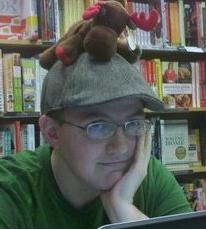
    ​That's me down there.

    Picture

    Archives

    February 2026
    January 2026
    December 2025
    November 2025
    October 2025
    September 2025
    August 2025
    July 2025
    June 2025
    May 2025
    April 2025
    March 2025
    February 2025
    September 2019
    September 2018
    May 2018
    March 2018
    October 2017
    August 2017
    April 2017
    November 2016
    August 2016
    October 2015
    May 2015
    March 2015
    August 2014
    May 2014
    April 2014
    March 2014
    February 2014

    Categories

    All
    Assassin
    Audiobook
    Autograph
    Balticon
    Blog Post
    Book Release
    Book Review
    Convention
    Cover Reveal
    Creativity
    Criminal From Birth
    Faire
    Festival
    Fiction
    Improvement
    Inspiration
    Literature
    Luc Bertrand
    Monthly Update
    Novel
    Opinion
    Outlining
    Plans
    Progress Report
    Projects
    Public Appearance
    Quest
    Reading
    Reading List
    Real Life
    Renaissance
    Renaissance Festival
    Roleplaying
    Roll Your Desting
    Short Story
    Speculative Fiction
    Starsigns
    Status Report
    Tennessee Renaissance Festival
    The Statford Chronicles
    To-read
    Updates
    Vampire Needed
    Writing
    Writing Technique

    RSS Feed

Site powered by Weebly. Managed by Bluehost