A. F. Grappin
  • Home
  • About Me / Patreon
  • Library
  • Writing Samples
  • The Chain Nerd

The Gate of the Feral Gods - Matt Dinniman (Book Review)

3/4/2026

0 Comments

 
Once again, this is not a first impression of this book. I’ve listened to it MANY times and it’s part of one of my favorite series.

Already up to book 4 of the Dungeon Crawler Carl series, and it wasn’t until a good halfway through that I figured out just what I wanted to discuss from a writerly standpoint on this novel.
Time skips. Missing out.

So, one of the big points of stories is to put the consumer in the middle of the action. We want immersion, to be the hero or villain as the mood strikes us, to feel the emotions, hear the sounds, experience the action. We want to be in the story, to know every bit of activity that's going on in the world around us.

That's why when something is left unknown, it's either a huge thorn in our sides, a tease, or a crime. It's why we see movie scenes where the villain tells his master plan, even just to a minion. It's why we get the cheap "We all know that" exposition dumps to put things into context, and it's why we as the consumer get to know things the protagonist might not know.

It's also why it's such a great tool to use to build tension and stress in your readers (or viewers or listeners). Having your readers not having all the information can be priceless, but it's a very fine line to cross. My mind goes to Sherlock Holmes, where there are tons of details the reader simply cannot know, but the characters (Holmes, in particular) do know. Part of the charm of Holmes stories is in the role the reader plays. We're the Watson, the observer, and we get to experience the same wonder at deduction as those around the detective. It's heavy handed missing out there, but it's for a purpose, and one that suits the genre.

Doing something like that in a fantasy story, banking on the reader's being woefully ignorant of crucial information, can be more harming than anything. So missing out is a tool to be used skillfully and sparingly, at least in general.

But when you miss out on events, when you're reading a book through the eyes of a character who has a finger in every pie... well, that's a situation where our own immersion works against us.

In The Gate of the Feral Gods, we have a big time skip. In the series, each floor of the dungeon only exists for a certain number of days. Because of that, every day is critical. Every hour is, even. It's time to figure out the first priority: getting down to the next floor. After that, it's crucial time to train, to grind, to work on bigger problems like keeping as many other humans alive as possible and breaking the system from within. You know, all that stuff.

So losing FIVE DAYS is a humongous blow. When a floor is only open for fifteen days, losing five of them is literally stealing a third of your time there. There's no way to get them back and no way to know exactly what happened in those hours. Sure, we hear bits and pieces of what happened, but it's literal time lost with no recovering. Just dealing with the loss and moving on.
The first time I listened to the book, I was talking about the loss with the friend who introduced me to the books. At the time, from an author standpoint, I wondered if the reason for such a theft of time was for a couple reasons:

1. The book was getting too long and needed trimming management

2. The actual content planned was thin and would have needed a lot of somewhat useless fluff to flesh out to the usual standard

3. The author had written himself into a corner on the plot points involved there and this was an easy out

That's meta-thinking there, like I said, from an author standpoint. What I neglected to think about at the time were the real stakes. I missed the trees because I was looking at the forest. The gaps Dinniman put there did a number of great things plotwise on several levels. It advanced the agency of many supporting characters. It upped the tension and urgency of Carl and Donut, who lost the time directly. The loss is reacted to and felt so suddenly, because it feels like no time passed. Like a coma or blackout. The time is just gone, for the reader, as well. Time becomes a commodity that can be stolen, just like anything else.

You know where else time becomes a rationed commodity this way? Interstellar.

It's the ticking clock, the looming deadline, and that's what Dinniman really ramps up in this book: that ticking clock. And he does it with a gut punch.

Don't be afraid to steal time from your readers or make them miss out. It can be useful just like any other technique. Practice at it. Make it hurt... but don't make it destroy too much.
0 Comments

Been to a conference or want to go to one? Share it and why.

2/16/2026

0 Comments

 
I haven’t been to any writing conferences, but I’ve been to conventions where one of the things I was focused on was writing. For something like 7 years, I was a regular attendee of Balticon. During these years, I became very involved in the New Media track, which was a lot of indie authors, podcasters, and voice actors.

For a number of reasons, I haven’t attended a Balticon since 2019. I miss it very much, but there has been a great shift in my life’s focus since then, and it’s simply not in the cards for me anymore. One of the main reasons is that I no longer run The Melting Potcast, the podcast I did for 5 years with my best friends. It was a writing variety show and still exists out in the aether. Go give it a listen if you’re so inclined.

At this point, it’s been almost seven years since I’ve been to a Balticon, since I’ve so thoroughly surrounded myself with other authors for any significant period of time. I don’t remember a whole lot of details about any specific interactions. I do remember highlights, so I think I’ll dedicate the rest of this post to some of the lasting things I picked up or remember from my author friends and from doing The Potcast. This may be a bit disjointed, but let’s go with the sort of stream of consciousness stuff, shall we?
  • If you’re writing genre fiction, or if you’re doing any sort of worldbuilding, consider trade routes and food sources. I attended a fantastic seminar one year about cooking in fantasy, but from the point of view of the actual cooks. Where do your ingredients come from? Would a cold, mountainous region have easy access to honey (not likely) or would they have to import it? Your desert people wouldn’t eat a lot of fish, would they? I think my favorite part of the seminar was when the speaker challenged authors in the audience to come up with a modern recipe, something simple like spaghetti and meatballs, and figure out how one of your cultures would make it. Even down to the water the pasta was boiled in. People really got creative with how they would modify the recipe to suit the available foodstuffs, like yak’s milk or unusual sources for things like starches and vegetables.
  • There is a wild amount of value in reading your work aloud. It’s a powerful tool to use in editing, especially when it’s a mechanical/technique edit. It helps find words and phrases that don’t flow well or read awkwardly. You can identify sentences and thoughts that carry on for too long. Hell, reading aloud even helps pick out typos, if you want to use it for that, as well.
  • Even the author with the smallest library can have a die-hard fan. 
  • Some of the most amazing bits of advice come from random discussions around a fire.
  • Give 30 people the same writing idea, and you’ll get at least 30 completely different stories. This was actually one of the founding ideas behind The Melting Potcast. We offered writing prompts and accepted flash fiction submissions based on them. Then we’d showcase 2-3 stories for the same prompt in an episode. A few different interpretations of the same idea. It was truly amazing to experience while doing it.
  • Some mistakes are great ideas in disguise. Or at least they can be mildly amusing.
0 Comments

What activities help you overcome writer’s block?

2/9/2026

0 Comments

 
​I’ve kind of talked about this in the past, but I think it’s largely been in other media, so let’s go ahead and discuss it here.

For me, there are two forms of writer’s block: the plot-block, and functional.

The plot-block has been the hardest for me to find ways to overcome. Sadly, it’s also the form I have the most history with. I’ve spoken in the past about the differences in my productivity before and after 2009, when I finally started outlining things. In short, outlining has made it a lot more likely that I’ll finish a project as opposed to starting it and then just… not finishing. Outlining lets me find all the major and medium snags in story prep and planning. I don’t get into serious small details, but anything that might derail the major plot or some medium subplots and all, I can confront in this planning stage rather than writing myself into a corner.

But… just because I’m outlining doesn’t mean these snags don’t crop up. Of course they do. Discovering them in the outlining phase rather than while actively engaged in writing really helps make problems like these more manageable. I’m not losing writing time by struggling to think where to go next. I don’t fall out of the zone or vibe or rhythm of writing because I lack signposts. The outlining gives me signposts, a map to follow. 

So what do I do when developing that map and coming across a plot snag?

My favorite technique is one I read about some years ago randomly online. I wish I could reference the original article, but the fact is I haven’t been able to find it. In short, it was a (current or former) Pixar writer who gave me this tool:

When you can’t figure out what happens, figure out what doesn’t happen instead.

Here’s how it works for me. I get pencil and paper or open another blank text document. The format doesn’t matter, but for me, I need there to be a visual representation to help mark the productivity. If you don’t need it, great. But for me, it’s necessary. This new document is going to be a mental declutter list. 

When I say figure out what doesn’t happen, I mean anything and everything. Say the plot you’re stuck in is about how a trapped character escapes their captivity. But now you’re stuck, almost paralyzed trying to figure out how to dig yourself and your character out of the problem you’ve put them in. 

I just start listing things. They don’t even have to make sense. But list anything that comes to mind and discard it as “not gonna happen.” Aliens don’t come and break him out. He doesn’t find a magical sword to cut his bonds. His god doesn’t appear to him. The magic gem he has doesn’t summon a genie…

Wait… he had a magic gem?! That’s right, maybe I can find a way to use that! Maybe it DOES summon a genie!

I’ve had the answer come that quickly before. I’ve had times where I’m writing random shit down for the better part of an hour, and then something just clicks. Thing is, I have yet to have this not work when I’m in a bind. 

What’s happening (at least for me) is what I’ve said before: decluttering. By actually writing down what doesn’t happen, I’m thinking of ideas but actually removing them from my head through the act of writing/typing them out. This way, those random fragments of ideas that don’t work aren’t just bouncing around in my brain anymore. The cleared space makes room for new ideas to form. But by doing random not-important creativity, I’m activating that portion of the brain, putting it to work to come up with bad ideas. And they inevitably make way for the right ideas to start happening. Sometimes, I’ll remember a detail from earlier planning that just seems to fit (like the gem/genie idea I made up) or I’ll just come up with something else entirely that can solve the problem… but then I realize that just came out of nowhere. But this ties back into outlining. Now that I know I’ll need that solution, I can much more easily backtrack in the outline and seed this new resolution, rather than going back and rewriting a first draft. I haven’t even written any of that yet. So easy to note [DETAILS NEEDED ABOUT THIS ITEM] or whatever the result is.

Give it a try next time you’re stuck or just want to find something unusual to get out of a situation. It helps come up with different options, even when you’re not stuck or blocked.

Functional block is the more frustrating one. And I’m really using that as a sort of blanket term to cover all the sort of normal perceptions of writer’s block, anything that keeps you in a state of just not being able to get words onto the page. I’ll also include burnout in this category, but I’ll talk about that kind of separately.

Functional writer’s block in general I can usually combat by just working on a different project than whichever one I’m stuck on. I bust out a writing exercise, a short story, or something else that activates the same portion of my brain, but maybe uses a different track of it. Like… think of the brain as one of those soda fountains with different flavors that all use the same spigot. Yeah, I need Mountain Dew, but that’s out of syrup. Doesn’t mean I can’t get the strawberry Sprite to pour! It can be stream of consciousness, a writing prompt, an exercise, another project, anything! Heck, sometimes I even resort to a different craft: making something with my hands, dancing in my kitchen, whatever.

Usually, that’s enough for me. Spend enough time on other things, but still creatively, and the urge, drive, or inspiration to get back to that “main” project usually comes back along. If not… well, sometimes you do need to abandon projects. At least I’ve still been productive on other things in the meantime. 

If that doesn’t work, then we go to our last tool (that I have currently). Sadly, this is also the only tool I’ve found that will always defeat burnout in the end. 

That activity is… give it time. 

As much as I spend my life waiting, sometimes that’s literally all there is to do when something is causing you to struggle. I’ve talked before about my own burnout. Still, here’s the story and how time was all I could make work for me.

I spent three or four years mired in a self-imposed schedule to get the entire Deadly Studies series of novellas off the ground. Originally, it was planned to be 7 novellas, but it turned into 10 due to plot expansions to tie it in with its parent series, The Statford Chronicle. I pushed myself hard for those few years, planning the series and then writing, editing, and releasing each novella rapidly. I was basically releasing one every 3-4 months for a few years until they were finished.

The last one came out in September 2019. The final volume, containing novellas 6-10, came out in January 2020.

And I couldn’t write shit after that. I let myself take a break because I was exhausted, but… once COVID-19 hit and I suddenly had a lot more time to do things due to quarantine, I couldn’t make writing happen again. I tried editing some short stories to fit them together into a more cohesive collection so I could release an anthology, and it seemed to be going well. Until I realized I needed to write a few more stories to tie everything together, and the idea just kind of fizzled after a few paragraphs. 

I gave myself more time. By mid 2021 I was working on editing/updating a sci-fi trilogy I already had written. I even got through the first book (this was my fourth draft that needed serious restructure) and it was fine. But book 2, ready for its third draft and restructure, never quite got off the ground. And I haven’t even looked at book 3, which is still in its first draft state. By 2022, I’d sort of let that peter out. I hadn’t written anything new in 2 years and… at this point, I’d already gone through a lot of existential crisis thoughts about maybe I’d completely burned myself out. Maybe The Deadly Studies was it for me, and I’d ruined my writing brain. It wouldn’t be the first time I’d overworked myself into destruction. I don’t compose or play music anymore because I burned myself outt oo hard in college. 

By the end of 2022, I had finally made peace with the possibility of never writing again. 2023 came and went, and 2024 started.

A few months into 2024, an idea came to me out of nowhere, and I started writing an outline. It was easy, and the ideas were good. Better than anything I remembered doing before the burnout. I found myself in tears more than once, relieved that after basically 5 years of not really writing (at best, proofing, revising), I was suddenly creating from nothing again.

Enter 2025 and… well, this website blog and my Patreon stand as proof that I’m writing again. I’m still writing. I tried forcing my way through the burnout, but it was not rewarding. 

I might never have come back to writing. Like I said, I made peace with the possibility of never writing again, but it was a good three years before I even got to that point. Three years of mourning what I’d been able to do so recently, not knowing if I’d be able to repeat what I’ve done before. And then at least another year of it basically falling off my radar. Writing became something I’d done and that I hoped to do again one day, but… I no longer felt like I was less for not being able to do it in the moment. It was a struggle, but not one I couldn’t live with.

It was a magnificent day when the block finally eroded and let my brainriver flow again.

But in short, I have not found any way to force-overcome writer’s block. In any form. You can work around it sometimes, but sometimes the only cure is to wait it out. Patience is a virtue, and sometimes it’s the most powerful tool we have. 
0 Comments

The Dungeon Anarchist's Cookbook - Matt Dinniman (Book Review)

2/4/2026

0 Comments

 
​Once again, this is not a first impression of this book. I’ve listened to it MANY times and it’s part of one of my favorite series.

So, DCC book 3, The Dungeon Anarchist’s Cookbook. 
This is by far one of the most confusing books I’ve ever read, but the amazing thing is, I don’t care. I’ve listened to this book probably going on 10 times at this point, and I still only maybe halfway understand the mechanics of it.
​
But that’s kind of the point, and it’s what I’m going to focus on for this review.

They say beauty is in the eye of the beholder. They say art is amazing because everyone experiences and interprets it differently. Those sayings could not be more true that when you inspect the Iron Tangle. So, a little context, without getting spoilery. This floor of the dungeon has its own unique theme, one that in story context they say is ambitious and unlike anything done before. 

Trains. A massive network of trains and train stations. Doesn’t sound so bad, right? Well, if you’ve ever navigated a metropolitan mass transit system, you’re maybe prepared for like 10% of what this floor has to offer. The Tangle is exactly what it is named: a tangle. There are hundreds (if not thousands) of train lines and a ridiculous number of train stations. Monsters ride the rails. Some trains only go on one-way trips. Some are on looped tracks. The characters have a whole thing going on most of the book trying to figure out where they want to go and then how to even get to where they want to be. It’s a total mindfuck to try and sort out and… Dinniman doesn’t care, in the best way.

He’s managed to write an entire book set in a place no one really understands. At least, no reader does. The point of a lot of the setup is that the layout makes sense to people in the DCC greater universe because it’s based on the context of things they’re familiar with but we simple Earthlings aren’t. We haven’t been exposed to a lot of the everyday technology, culture, and possibilities of the universe in the book series. We literally lack the context needed to interpret the art of this floor of the dungeon.

And that is what makes me, as a writer, admire what Dinniman has done. Not only has he created something completely alien, he has gotten across that it makes sense to aliens but not to us. The book actually has a disclaimer saying it’s really best not to try to understand the Iron Tangle.

It’s like a masterclass in bullshitting, when you get right down and think about it. I mean, to be totally honest, fiction writers/storytellers are nothing but professional bullshitters. I say that as a novelist and collaborative storyteller (read: tabletop RPG Game Master.) The whole job is to make up entertaining or poignant bullshit and make it look intentional. 

I don’t know if that’s something Dinniman really set out to do, or if he lucked into it, or what. Whatever the reason for the Iron Tangle being the affront to Earth logic the way it is, he did a great job bringing the characters along to understand their surroundings while still making it a challenge for the reader to make much sense out of it. It doesn’t help we pretty much cannot have a visual representation of it, mostly due to scale and a piece of huge context we get about it late in the book. The key to cracking it, so to speak. I’m sure someone, somewhere could make a real valid visual of it, but I absolutely would never take that kind of thing on myself.

This is a book where you really do just sort of need to let the setting wash over you. Everything else Dinniman has established so far in the series is still present and still at the forefront. The people are first and foremost. Their relationships, arcs, their fallings out, it’s all there. A lot of great interpersonal drama happens this book, and not always involving the characters you think will be involved.

It’s not even my least favorite DCC book, despite the confusion inherent in the level itself. Maybe it’s my inability to actually visualize stuff in my mind anyway that lets me brush off the frustration of trying to imagine the Tangle. Maybe not. Either way, always a good read or listen, this one. 
0 Comments

What would you tell a brand new writer?

1/19/2026

0 Comments

 
This sort of question comes up a lot in writing groups and discussions. The answer is simple, but pretty much always the same.
​
Write. Just write.

It seems so trite and unhelpful. But it really is that simple. Like any skill, it takes time and practice to get any good, and with writing, that’s literally just making words.

Just write.

You’re going to make mistakes. Everything at every level, from the sentence structure to the meta analysis of the plot, is gonna suck. But you can’t let that stop you. It’s the same for every skill you want to learn. It’s going to start rough and ugly. It’s going to be messy. It’ll not make sense, there will be plot holes. You’ll reuse phrases and overuse words and retell the same thing in different ways and reword the same concept and go over the same details until it’s overdone. You’ll put details on the wrong things and underemphasize what’s important.

But you’ll learn from those things.

Just write.

There’s no point in worrying about agents, publishing deals, or royalties until something’s actually written. Even editing isn’t something you can worry about until you have words on a page.

Just write.

Sure, there’s plenty else to do. Study writing. Read widely.

But nothing is going to come from your desire to tell a story unless you’re actually doing the work.

Just.

Write.
0 Comments

Who is your favorite author and how have they inspired you?

1/12/2026

0 Comments

 
I’ve talked about some of my favorite books before and what they taught me. At this point, I don’t know that I can honestly say I have a favorite author. I’ve read too widely at this point to be able to single out an individual and say they’re my favorite. I’m more likely to focus on one technique or skill and say they do this thing well.

So I suppose that’s what I’ll focus on here. A few authors I like and what they do well. Because all these things they do well are what inspire me to upgrade my own writing skills. So here are a few authors I admire and what I admire them for. Keep in mind these opinions are my own and I neither can nor will excuse any bullshit they pull or believe on a personal level. This is just about the writing.

Robin Hobb - Endings. Holy HELL can Hobb write endings that are satisfying. And I mean that for books and for whole series. I’ve read the Soldier Son trilogy multiple times, and each book is so well contained but the whole series is wrapped up well, too. And then there’s the expansive multiseries series The Realm of the Elderlings. Not only are each book and each series wrapped well, but the final ending to the whole epic is just… epic. I cried so hard, so emotionally sated that I almost couldn’t handle it. Hobb makes it bittersweet but easy to accept the goodbyes readers say to characters, especially ones we’ve traveled with across years and many many books. I’d kill to be able to write an ending one-tenth as satisfying.
​
That said, the beginnings aren’t as gripping. Many of them start very slow and take some settling into. But once in, if you’re not hooked, then please don’t force your way through. Every book isn’t for every reader. That’s why we have variety. But if you want a good ending, go for a Hobb book.

Matt Dinniman - Okay, to be fair, I’ve only ready his Dungeon Crawler Carl series so far, but I do have others in mind to read eventually. But from DCC, I can say this man is great at having things happening behind the scenes and revealing them in fantastic ways. He very much keeps in mind that “onscreen” characters aren’t the only ones with agency, and he makes forgetting it your problem. Anything that seems to come out of nowhere has inciting seeds ages ago that you just dismissed because it didn’t directly affect what you were seeing as a reader, especially if it’s through the eyes of your POV character. Dinniman is great at keeping you informed of the small details of things as you need to know them.

I guess I’m also going to mention a small personal gripe I have with each author, so here we go. And oh, is this a total nitpick on my part. So trivial it annoys me that I’m annoyed by it. Dinniman as a couple technical word choices that I can’t help but notice and get a tiny spike of annoyance at the repeated use of the word. The main one is the word “upon.” He uses it instead of the more simple “on” a lot more than anyone else I know. And it seems… so out of character for the narrator, Carl, to use that so much. Similarly, he uses “as” phrases really often. I haven’t gone and one any sort of analysis of how often Dinniman does both these things, but it’s enough that I’ve noticed them both. Might not have noticed if it weren’t for listening to the audiobooks, but yeah, I’ve noticed. Like I said, tiny gripes.

Stephen King - I mean, obviously, he had to be in this list, right? Put simply, King has some great ideas and expands on them well. His beginnings are a lot more gripping than Hobbs’s, that’s for certain. His first line for The Gunslinger is often touted as like the quintessential, simple, gripping first line. That said, once King gets to a certain point, all sense of direction and conclusion just sort of… stop. Often, it’s not until the very last few pages of the book. I’ve read a number of King’s books and… I’m just never satisfied with the endings. So I guess for him, the gripe goes hand-in-hand with my praise. The man has fantastic ideas and really ramps up the conflict to dangerous levels. But it’s always felt to me like he can’t dig his way back out and just… ends things because he’s done trying. 
0 Comments

Carl's Doomsday Scenario (Book Review)

1/7/2026

0 Comments

 
Once again, this is not a first impression of this book. I’ve listened to it MANY times and it’s part of one of my favorite series.
​
I don’t think I’ve talked about this yet publicly, but those who know me should be familiar with my thoughts on the second book of a series. Second books are hard, and at least to my perception and experience, a lot of that is because of the nature of story structure. The beginning setup is exciting, the buildup to and crux of the climax are cathartic. But between those two areas, it’s hit or miss on how much excitement you can really manage. There’s a fine balance between boring and keeping things too tense and high-emotion for too long. Make things too exciting early, and you don’t leave yourself anywhere to grow to for the ending, and it becomes disappointing.

Carl’s Doomsday Scenario doesn’t have those problems.

I honestly don’t know how Dinniman does it. This is only book 2 of the series, and it’s just as exciting, fresh, and involved as book 1. The stakes are higher, the micro and macro plots all chug along at good paces, and the character growth is steady but still contained. He’s got a tight rein on the story and character growth, which I almost can’t even fathom. The road map this man must have, even of just the basics of things like abilities and stat growth, must be insane. It’s my understanding that Dinniman is largely a pantser, which I respect immensely. Not planning for me is a huge disaster when it comes to actually finishing projects, so I need a detailed idea about where I’m going, if not also how I’ll get there.

Anyway, a quick shakedown of what this book’s about. Now through the “tutorial” floors of the dungeon, Carl and Donut get to go through the game’s race and class selection before starting the third floor, the first of the regular themed floors. In the dungeon, floors 3, 6, 9, 12, 15, and 18 all share a common overarcing form and storyline, based off an old fable or child’s tale. Floor 3 is the Overcity, and it’s also the first time players are randomly spawned, so it opens up the character list to people from all over the world, not just the geographic location we started in.

The game has gone open world, baby! Even so, each book being its own setting change (yeah, that’s kind of the format of the series, not a spoiler) is a great tool in his belt for this. Each floor is self-contained, so there’s a lot of freshness with the problems of each area, with really only interpersonal issues being what’s carried over. Any floor issues are cast away with the ending of the floor. And there’s still the greater universe outside the dungeon in play, but that’s semi-intangible.

In this book, we also get introduced to quests, elite mobs, a day/night cycle, all kinds of things. New skills, spells, and gear abound.

And yet, Dinniman controls everything to a ridiculous degree. Sure, every single living player has moved far beyond the capabilities of a normal human, but there are still limits to what is possible.

For example, Carl doesn’t really have any good way to ascend or descend unless there are like… stairs or ladders.

That’s something I can really say for Dinniman. He’s great at pointing out small weaknesses and flaws in his characters and making them bigger than they seem to be or even should be.

There’s a lot to learn from Dinniman in this book about pacing, growth, and exploiting the failures and flaws of your characters. And I gotta say, what a climax and denouement to this one!
0 Comments

Be Kind To Yourself

12/29/2025

0 Comments

 
Okay, you can call this a cop-out if you want, but it's my last free post of the year, so I'm saying what I want.

Be kind to yourself for the rest of the year. Use these last few days as a way to practice being kinder to yourself in 2026. You're worth the same grace you give everyone else. 

Take a moment for yourself. Examine your real feelings. Excuse things you do that annoy yourself, or seek ways to change the habits and cope with the stress inherent to being you. None of us knows all of what anyone else deals with, and that's okay. We can be gentle with ourselves and one another, and we'll all be better for it.

So please, love yourself as the last thing you do this year and the first you do next year. I love you. For no other reason than you're you.
0 Comments

How do you come up with character names?

12/22/2025

0 Comments

 
There’s a whole lot of variety in my naming conventions, and sometimes, it varies depending on the story world I’m creating. I was working on a project (that I still may get back to someday, who knows) where the naming conventions for classes were very distinct. Nobility used nature names as part of their culture, mostly because they were certain in their dominance over the world. So you’d see names like Chrysanthe, Quartz, Cirrus, and Mesa. The commoners didn’t have that arrogance in their naming conventions, so I went with more “traditional” fantasy-style names. I did a lot of what I normally do for fantasy: modify normal names.
​
Modifying more common or normal names in fantasy is pretty standard for me, as I mentioned. It can be as simple as changing a vowel in an existing name: for the main villain in Criminal From Birth, I just changed the e in Brent to an i, and we get Brint. It can be changing a beginning or ending sound. Silas, with a different ending, becomes Silen. Kerry drops the y, becomes Kerr, becomes Cair to make the pronunciation a bit easier to get right when it’s only read. I’ve seen the name Monica in a book changed to Ronica, and it’s beautiful.

There’s also always the Pern version of blending names. It’s the same sort of blending that get used with shipping characters: you just mash the two names together. In Anne McCaffrey’s Pern books, children are most often named a mashup of their parents’ names. So F’lar and Lessa have a son named F’Lessan. Grab your parents’ names and rename yourself. I could be Kenry, Mareth, Manneth, Kary, or even Marketh.

Honestly, those are my favorite ways to name characters: the letter/sound substitutions or name mashups.

I’m also not above just putting my friends in books, either with their actual name or modifying them. And it doesn’t have to be just one change. Hell, go a few steps. Take a name, find a foreign language variation of it, and riff off that. Like, if you have a Henry, turn it to Enrique, and start messing with that. Spell it phonetically. Onrikay. Drop a sound. Rikay. Make it easier to read. Rickay. Change a vowel. Rackay. Suddenly, Henry is unrecognizable, but you have a usable name.

The point is, it’s no holds barred. I’ve seen unusual and unique names on people in real life. Celebrities names their kids all kinds of weird stuff. So find what you like and name your character that. Just… if you’re naming a real person, give that knowledge some consideration. They have to live with the name. It’s not like naming a pet.
0 Comments

Dungeon Crawler Carl (Book Review)

12/3/2025

0 Comments

 
I’ll come out upfront and say this is not a first impression of this book. I’ve listened to it MANY times and consider it one of my favorite series.
Ah, Dungeon Crawler Carl. This is an irreverent, humorous-but-heartfelt LitRPG novel that very perfectly fits in with the gamer mentality.
At least in my personal opinion.
It’s cliche to say this, but it really feels like this is a book that was written for me. I’m definitely right smack in the target demographic (nerdy lifelong gamer/reader), but it’s not as niche as that might seem. Seriously. The fan base is vast and varied, but all as passionate about the themes, characters, and memes that make up this fantastic series.
Anyway, this particular book. To sum up, our main character is Carl, a mid-20s man who just broke up with his girlfriend and still has her pampered show cat in his apartment. Everything’s fine until the world ends.
You heard right. Aliens have claim to all the resources on Earth, and the time has come to harvest. However, intergalactic policy states that if a resident of the planet successfully navigates all 18 floors of a dungeon, they can lay claim to the planet and save it.
Enter the Dungeon.
This book covers floors 1 and 2 of the dungeon, bringing readers along with Carl as he learns how the game works and sees how people adjust to literally living in a televised game where magic is real, goblins are addicted to meth, and when you die, you die. I’d love to go into the plot, but to be totally serious, it’s best taken with no expectations to allow the insanity and joy of it all to just wash over you and take you by surprise.
Just know there’s no gratuitous sex, but there is a lot of really strong language, gore, more gore, and MORE GORE. There is sexual innuendo and suggestive stuff, but nothing explicit there. Not for the faint of heart.
Dinniman is a master of the unexpected but logical. Some of the unexpected twists and events seem to hit out of left field, but in retrospect (or a second or millionth read/listen), they are telegraphed well and subtly. Even better, he very deftly introduces the reader to the intricacies of the game along with Carl.
So, I mentioned relistening/rereading. This book is well worth multiple intakes. I probably listen to the series 2-3 times a year since I first discovered it, and I’m always finding something new about it: some new hint, detail, or just straight up something that I missed previously due to a momentary lapse in attention or memory.
I want to discuss the audiobooks primarily, mostly because they are so wonderfully done. The majority of that is at the hands of the narrator, the incredible Jeff Hayes. This man, guys… This man is so spectacular at voices and deliver that it surprises a lot of people to realize he does ALL THE VOICES. With a couple exceptions, Hayes does them all. If he isn’t doing a character, it’s because there was a guest voice actor brought in for someone particular— sometimes to great effect, sometimes not so much coughCriticalDrinkercough
I have not read the paper or ebook versions of this book, though I do own an autographed copy of this one. I’ve only listened to the audio, and it’s a hoot in and of itself. It truly brings the story alive, and that’s not even counting the fact that there are AUDIO IMMERSION TUNNELS happening, where the books are full audio dramas. I’ve heard snippets of those, and they’re one step further into really making the books real.
I plan to do reviews of each book as I work my way through the series again. Naturally, as we progress, the number of times I’ve consumed the later books will be less than the first few. When I first got introduced to the series, I believe book 5 had just been released. So I’ve been around for the releases of books 6 and 7, and am eagerly awaiting book 8. But book 6 I’ve only listened to 3 or 4 times, and book 7 twice. So I’ll be reviewing that after my third listen. Keep your eyes out for my impressions of the books, and seriously, grab a copy. You won’t regret it!
0 Comments
<<Previous

    Author

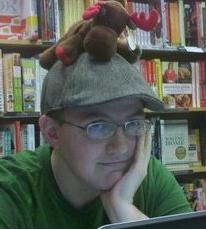
    A. F. Grappin is a general creative who mainly focuses on speculative fiction and crafting.

    ​That's me down there.

    Picture

    Archives

    February 2026
    January 2026
    December 2025
    November 2025
    October 2025
    September 2025
    August 2025
    July 2025
    June 2025
    May 2025
    April 2025
    March 2025
    February 2025
    September 2019
    September 2018
    May 2018
    March 2018
    October 2017
    August 2017
    April 2017
    November 2016
    August 2016
    October 2015
    May 2015
    March 2015
    August 2014
    May 2014
    April 2014
    March 2014
    February 2014

    Categories

    All
    Assassin
    Audiobook
    Autograph
    Balticon
    Blog Post
    Book Release
    Book Review
    Convention
    Cover Reveal
    Creativity
    Criminal From Birth
    Faire
    Festival
    Fiction
    Improvement
    Inspiration
    Literature
    Luc Bertrand
    Monthly Update
    Novel
    Opinion
    Outlining
    Plans
    Progress Report
    Projects
    Public Appearance
    Quest
    Reading
    Reading List
    Real Life
    Renaissance
    Renaissance Festival
    Roleplaying
    Roll Your Desting
    Short Story
    Speculative Fiction
    Starsigns
    Status Report
    Tennessee Renaissance Festival
    The Statford Chronicles
    To-read
    Updates
    Vampire Needed
    Writing
    Writing Technique

    RSS Feed

Site powered by Weebly. Managed by Bluehost