A. F. Grappin
  • Home
  • About Me / Patreon
  • Library
  • Writing Samples
  • The Chain Nerd

Reading Widely

5/25/2026

0 Comments

 
I believe I’ve touched on this subject a few times, but I wanted to make sure I actually went into it a little bit.

A lot of advice given to writers is to read. Read, read, read. Always be reading, along with writing. 

That’s good advice. But what the heck am I supposed to be reading? Fiction like what I’m writing? Stuff unlike it? Academic papers on psychology? Blog posts on writing?

The short answer is… well, yes. In everything you read, there is going to be at least a little something you can take from it that will make you a better writer.

Granted, everything isn’t going to have the same value for you, but there is always SOME value.
Read fiction that is like yours. I mean seriously. How are you going to write science fiction if you’ve never read anything science fiction before? What kinds of things will your space marines get up to that makes no sense if you haven’t gotten any sort of military experience, or at least gotten some idea what space marines do? How is your magic system going to stand up to scrutiny when you’ve never experienced one from another author? Or a dozen?

Oh no, but then I’ll be derivative of everything I’ve read! Yeah, that’s not how this works. You can always learn what you don’t like about other systems and writers, too. Just because you know how magic works in this world or that, or how space marines work in this universe, it doesn’t mean you have to copy them. There are no rules, but there can be precedents. You can strip layers and pieces off works that have come first, twist other things, completely replace some, and you have your own system. But I bet you may have also come across ideas and uses for resources (like magic or technology) that you never would have considered before. And that’s just scratching the surface.

Read stuff unlike your fiction, too! Seriously. Read histories if you write urban fantasy. Read romance if you write science fiction. Read horror if you write romance. There are tons of writing techniques, plot devices, all kinds of things you can learn from crossing genres. On the small, simple level, your fantasy might have some scary moments. Having read horror can help you on a meta level, knowing how to increase tension to instill dread and fear. Having read romance, your space marine commander can woo his love interest or seduce the enemy commander or alien overlord or whatever.

Academic papers? Yeah, read them! If they interest you, why not? But from a writing standpoint, they’ll definitely teach you specific vocabulary, how to emotionlessly get things across, and there’s always the use of subject matter. I recently did a post on writing what you know. This ties into it. Have interest in cell reproduction? I’m sure you can find ways to incorporate that into fiction somehow. It could be inspiration for an alien race, or a disease that affects magic users, or the basis for a monster. Your specific interests can help inform what you write.

There’s even value in reading very, VERY bad writing. I’ve slogged through more than a few stories and books that were horrible. Poorly edited, not at all fleshed out, just… bad. Sometimes there are lessons to learn in how not to write things. I’ve learned what kinds of things to look for as red flags in my writing mechanics themselves. I’ve seen great ideas executed so poorly it’s a real shame… and I’ve taken away lessons from them. Like how too much self-insertion turns into mental masturbation no one else will get anything from. How trying to hide self-insertion fantasy by making the subject of the book “You” rather than I or an actual main character is just as awful. I’ve read a romance where the majority of adjectives for anatomy are the same couple words… and I’ve learned how NOT to narrow my vocabulary that way. I’ve also read narratives where the author clearly used a thesaurus on far too many of their words in an attempt to sound smart. That backfires a lot. It becomes too much about the individual words then, rather than the whole sentence or paragraph.

Am I perfect? Far from it. I’m still learning. Always am. You should be, too. 
​
Read. Read widely. You may not get a whole lot for your horror novel by reading that study on window and door glass energy efficiency, but you might. 
0 Comments

How Do You Consume Books?

5/18/2026

0 Comments

 
I’ve had quite the privilege in my life, I think, to have always had access to a ton of books. From libraries to bookstores both physical and online, books have always been around me. As such, I’ve had the honor of ingesting books in multiple ways. 

Naturally, paper books were my first. It was sometime around 2012 when I got my hands on a kindle and was able to take in ebooks. That son of a gun really came in handy when I spent a lot of time on treadmills and ellipticals.

It was around the same time that I got into podcast serial novels (podiobooks) and from there, audiobooks in general.

I have a place for all of these in my life. Granted, these days, I’m most likely to take an audiobook over anything else. Mostly, it’s a way to ingest stories and information while doing other things: exercising, driving, cleaning, crafting.

I’d definitely say there are pros and cons to each form of consuming fiction. Audiobooks do let you split your focus. It allows a multi-use of the time it takes to get the story into your brain. However… it can also serve as a takeaway from the experience. You’re less physically focused on it. Not holding the book in your hands, not dedicating your sight to it… I’ve noticed some failings in my ability to actually sit and focus on reading since mostly switching to audiobooks. It’s damaged my attention span, while at the same time allowing me to be more productive. Sadly, as life itself has become more demanding, it’s necessitated audiobooks and that attention split. So while I’ve been able to spend less time on focused reading, it has kept my ties to fiction alive. I’m reading more… just through listening.

Reading physical books (or ebooks) are largely in the same vein for me. Yes there’s the whole paper vs tablet discourse. Both have their place. But the act of reading on either is the same. You’re holding the text and reading with your eyes. It does have some serious benefits over audiobooks. Since there’s not a voice delivering it, interpreting the words, you have much more control over your own experience with it. You can decide how names and places are pronounced (even if there’s a pronunciation guide. You can ignore it if you want!) however, it does demand time and attention in itself. And no small amount of it. 

I’ve been working on rebuilding my attention span for sitting and reading. It’s difficult, but it is very worth it. 
​
So tell me, do you have places in your life for ingesting stories? How do you take them in? Audio? Paper? Comic forms or serials?
0 Comments

Writing What You Know

5/11/2026

0 Comments

 
We hear this advice a lot. Write what you know. But what is it supposed to mean? Are people who read modern fiction, set in the present day, doomed to only write the same sort of stories? Are those how enjoy memoirs only allowed to write their own memoir? Or is it something more stringent? You’re a straight white man, so your characters must only be the same? You have spent your career working fast food, so your settings have to be fast food joints?

Fuck that.

First of all, your average person is going to know a lot more than you (or perhaps even they) might realize. We all live in our own little worlds, and they are as varied as the people themselves are. None are the same, though the greater Venn diagrams are complex. My older brother and I had the same locational upbringing. We share a knowledge of the setting we grew up in. Many of the same people are in our shared world… but so much else is different. We both have some musical education, for example, some chemistry. But I pursued further musical education, and he’s a chemical engineer. Already, our “what you know” baskets have changed. He has a wife and children; I do not. That doesn’t stop me from writing characters who are married or who have children.

It goes on from there. But it is so much more complex. Were the two of us given the same sort of basic plot idea, our interests and experiences would have us interpret it differently, create the world of our novels differently.

So what the hell does “write what you know” mean?

It means you have so much at your disposal that no one can write what you can. It means that you have a special combination of knowledge that you can absolutely tap into for a good story.
I’m going to super simplify things here, but let’s put this in terms of something I often come across in my reading and writing: magic systems.

I, by dint of my musical education mentioned earlier, would have a pretty easy time centering a magic system around one of my interests/hobbies. Music. I’m also a chainmailer. I could build a system around that. The metals involved, the dynamics of the weave pattern, how the two mesh: metal and weave. 

Crap, I’m giving myself ideas.

But what inspired this post was another book I recently read for the second time: Babel by R. F. Kuang. Kuang’s magic system in Babel is deeply based in linguistics, specifically the imprecise nature of translation. That’s not something I would even slightly be able to pull off. I enjoy languages, but nowhere near the depth of what it would take to develop a novel like this was.

Once I started thinking about that, how that is a very good basis for “write what you know” it made me think about what wonders are really possible. Imagine a fashionista’s take on a clothing- or jewelry-based magic system. A sleight-of-hand enthusiast’s take on political machinations in a scheming peerage. What could a gourmet chef do with a sci-fi setting, and how would that differ from a line cook’s take, or a caterer’s or baker’s?

The varied interests and skills people have, those earned through curiosity or necessity, give every one of us a unique perspective that could do wonders in the written world. It doesn’t have to be limiting in the slightest; you don’t ONLY have to write what you know.

But your passions equip you to write your own story, one that only you can pull off. One piece of random, “useless” trivia you know has the potential to spawn the basis of a magnificent piece of writing.

Of course there will still be research to do. There is always more to know. But when you’re passionate about what you’re writing, it shows, and you can bring others along with you on it. 
​
So write what you know. Don’t hold back your excitement for it. Insects, candy making, agriculture, engineering, whatever it is that has your attention is worth a story.
0 Comments

Eye of the Bedlam Bride - Matt Dinniman (book review)

5/6/2026

0 Comments

 
Once again, this is not a first impression of this book. I’ve listened to it several times and it’s part of one of my favorite series.

I actually went into my audiobook history and looked up book publication dates to see exactly when I first fell down the DCC rabbit hole before writing this. I wanted to see my own personal history, where I came into the series. I was fairly certain The Eye of the Bedlam Bride was the next DCC book to be released after I discovered the series. I was correct, but only barely. I purchased the first audiobook on May 27, 2022. The audiobook for book 5 literally released the day before that. In short, I was correct that book 5 was already released before I fell into the series, so this, book 6, was the first one I actually had to wait for.

I’ll say up front it didn’t disappoint. I just finished yet another relisten (since book 8 is coming out in a few months) and to do these reviews, so naturally it’s fresh in my mind. I was listening to it in part with the mindset to write a review about it, but I’ll admit I had trouble the whole time trying to figure out what aspect of writing really struck me. I’m really trying to put myself in a wordcrafting mindset, and less of the technical stuff. I’m trying to discuss plotting, character development, that sort of thing.

So what the heck can I talk about in The Eye of the Bedlam Bride that I haven’t already discussed?

I finally figured it out. Sure, this is something that’s been touched on in the other books, something I could absolutely have talked about for any of them. But it really comes to a big head here.

In this book, we really see the characters flirting with losing everything. We see loss teased and toed. Dinniman rides the edge of complete destruction and collapse of his story and yet… we go on. 

He really puts the reader and characters in serious danger, and while it’s very easy to fall into the safe mental place of assuming the main characters have plot armor, this book really drives home that no one is safe. Dinniman takes a good number of secondary characters, ones that we’ve become very fond of over the last few books, and threatens them in ways that really seem unsolvable. At the tail end of the last book, the reader learns that one character in particular is going to be a major threat on floor 9, just one book away. But in this book, the characters learn it in general, and it needs to be dealt with. We lost friends in the last book, and… we lose more in this one. Dinniman truly spares no one from the punches he pulls. It’s par for the attitude of the powers that be within the narrative, but the struggle simply continues to ramp up at a good pace. The way Dinniman manages keeping the threats in check, keeping things from spiraling out of his own control, is amazing to me. I don’t think I have the skill to do such a thing.

Not yet, anyway. That’s part of why I’m doing these reviews: to critically think and identify skills and techniques I haven’t necessarily considered before, and to get them on my radar.

Dinniman is far from afraid of threatening his characters, and that goes for every single one of them. Carl and Donut have dire concerns over all kinds of things, but they stay true to themselves, and dear god how they utilize things from previous books to manage present problems. This whole series is an epic feat I can’t help but admire. There’s just straight up a lot to learn from the writing and plot/detail development here.

There’s so much nonlethal loss in this book, for so many characters. People we don’t necessarily “care” about as good guys still experience something being taken. And it’s not universal. Losing the self is addressed in multiple ways and to multiple degrees. Everything from body part loss to grief over lost loved ones to mourning things you didn’t know you had until it was taken away happen here. We see loss of control and autonomy, even briefly. The possibilities of how we can be hurt are not shrunken from. Dinniman really takes out the safety net, or the feeling of it, at least. Nothing is safe. No one is safe.

That’s a big lesson to take as a writer. You hear the saying “kill your darlings” but we seriously have a much deeper and more apt example than just those words in this book. Maim your darlings would almost be more apt a description, but… the point is there. 

I need to be less gentle with my characters. 
0 Comments

Status Report - 4 May 2026

5/4/2026

0 Comments

 
April was again, very lean, but again, what words I did get out were good.
​
Short Story (working title “Recalled”) - I think I’m leaving this one on the burner for now. Once I get some time and revisit, I’ll either finish it or maybe put up what I have for your opinions.

Criminal From Birth sequel - Still with editor. It’s been rough. Still mulling over the title.

LitRPG book (working title Subscription Life) - This (and blog posts and D&D) are where most of my writing effort has gone this month. Not as much as I wanted, but good ones. I’m working on the first chapter, feeling out my main character, and I’m liking it so far. I’ve gotten 1445 words written on it! This is going to need some serious rewrite, but I’ve been enjoying doing these immediate rewrites to really set things up properly, get into the details early.

Here comes May. It’s gonna get nuts heading into the latter half of the month and into June. Wish me luck!
0 Comments

    Author

    A. F. Grappin is a general creative who mainly focuses on speculative fiction and crafting.

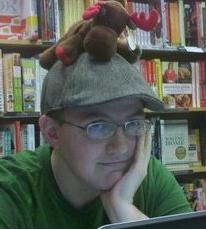
    ​That's me down there.

    Picture

    Archives

    June 2026
    May 2026
    April 2026
    March 2026
    February 2026
    January 2026
    December 2025
    November 2025
    October 2025
    September 2025
    August 2025
    July 2025
    June 2025
    May 2025
    April 2025
    March 2025
    February 2025
    September 2019
    September 2018
    May 2018
    March 2018
    October 2017
    August 2017
    April 2017
    November 2016
    August 2016
    October 2015
    May 2015
    March 2015
    August 2014
    May 2014
    April 2014
    March 2014
    February 2014

    Categories

    All
    Assassin
    Audiobook
    Autograph
    Balticon
    Blog Post
    Book Release
    Book Review
    Characters
    Convention
    Cover Reveal
    Creativity
    Criminal From Birth
    Editing
    Faire
    Festival
    Fiction
    Improvement
    Inspiration
    Interview
    Literature
    Luc Bertrand
    Monthly Update
    Novel
    Opinion
    Outlining
    Plans
    Progress Report
    Projects
    Public Appearance
    Quest
    Reading
    Reading List
    Real Life
    Renaissance
    Renaissance Festival
    Roleplaying
    Roll Your Desting
    Short Story
    Speculative Fiction
    Starsigns
    Status Report
    Tennessee Renaissance Festival
    The Statford Chronicles
    To-read
    Updates
    Vampire Needed
    Writing
    Writing Technique

    RSS Feed

Site powered by Weebly. Managed by Bluehost