A. F. Grappin
  • Home
  • About Me / Patreon
  • Library
  • Writing Samples
  • The Chain Nerd

What would you tell a child who wants to be a writer?

11/10/2025

0 Comments

 
I was very fortunate to have gotten bitten by the writing bug at a fairly early age. I’ve talked about this a bit before. It was early middle school when it happened, so around age 11. By age 12, I was definitely mired in the written word. It was pure fortune that even though my writings were TERRIBLE, I got a lot of good support from the people whose opinions I cared about.
To be fair, at the time, I didn’t really know how bad they were. I read, yes, but I was not introspective, subjective, or anything like that. I was just having fun. And to be completely honest, that’s what writing should be.
It should be fun.
More than anything, that’s what I would (and do) tell children who want to be writers. Both of my goddaughters are artistic in some sense, and both do dabble in some writing. One of the first things I was proudly presented by one of them (a few years ago now, so the author was roughly age 8 or so) was— and I say this affectionately— the most derivative, poorly-written fanfiction I could imagine. The first half or so was pretty much just a written Cliff’s Notes version of the film they were “based off.”
I speak that openly about it because at this point, I know my own early writings were no different. I’ve already posted on this blog about some of the first works I recall: The Kung-Fu Cockroaches being one I particularly have in mind. It was derivative and more poorly-written than I care to claim these days. The support I got for it was encouragement, excitement over having written a thing, though… looking back, of course I never got any good actual feedback. But what do you tell a preteen who has the guts to put themselves out there like that?
The same thing you should tell anyone trying something new: that you know how hard what they’re doing is. You praise the effort, the passion, and the courage to do it. You acknowledge the hard work they’ve put into it, because effort is what’s going to help them improve.
With any skill, you get out what you put into it. You have to invest. For a child, it’s much simpler than trying to actually guide the improvement. Don’t criticize their word choices, plot, characters, any of that. You don’t have to lie about things being good. Praise the effort they put into it. Tell them to keep writing. ASK WHAT THEY PLAN TO WRITE NEXT.
Frankly, this goes for adults, too, and not just in writing. Any skill someone is trying for the first time, just encourage it. It doesn’t have to be super deep encouragement that analyzes what they do. If someone’s playing tennis for the first time, focus on the fun and immediate benefits. Be happy because they’re trying something new, not that they’re not already Pete Sampras or not making money off it. If your mother decides to take an airplane pilot simulation course, don’t shake your head and make it clear you doubt she’ll ever fly a plane.
You have nothing to lose and everything to gain by being positive and supportive. Even if that preteen spends the rest of their life writing and NEVER PUBLISHES ANYTHING, don’t stop encouraging. The sum of our skills is not based on how much money we make off something. It can and should be valued in the joy we get creating or doing a thing.
And if they never want to share them with the greater world, never publish their art, never play a game competitively, that’s not a “waste” or a “pointless practice.”
In short, there really is no reason to not encourage others’ hobbies. And it’s not that hard to be genuine about it. If something makes a person happy, focus on how happy they seem to be doing the thing. You don’t have to like or even approve of what they do, but… don’t be the reason someone stops doing something they enjoy.
Especially if it’s a child.
0 Comments

The Handmaid's Tale by Margaret Atwood (Book Review)

11/5/2025

0 Comments

 
This being the first of the book reviews I’ve done in quite a while, I suppose I should clarify what my intentions are with them. In the past, I have written book reviews mostly with the intent of supporting author friends. I see no reason why I shouldn’t continue to support authorly friends, so if you have a book you’d like me to read and review for you, please contact me. I will warn that physical reading take a lot longer for me these days. Audio is better, mostly because of time and attention constraints. I have drive time that I can dedicate to listening where I can’t read a physical book while doing that. That’s a good 5 hours a week just listening to books. I also listen while cleaning, eating, cooking, that sort of thing. I can try physical reading again too, so please don’t let that deter you if you want my thoughts on your work.
I digress, as I so often do. What I intend with these book reviews: my own thoughts, such as they may be. Sometimes, it may be a lot of focus on plot and character. It could be on craft, voice, even setting. Knowing me, a lot will just be general thoughts. Anyway, in short, just know that I read widely and enjoy talking about books in general. So expect that from these reviews.
_________________________
This is not a first impression of The Handmaid’s Tale. No, I first listened to this audiobook probably 10-ish years ago. But I just finished a re-listen and it was better than I remember. And I remember liking it a lot then. That said, here are my thoughts on it as it sits fresh on my mind.
Atwood writes beautifully. Simply put, it’s wonderful prose that, at least in my opinion, perfectly encapsulates the protagonist’s mindset. It isn’t until the epilogue that we discover this story was “discovered” as a series of audio cassettes, but that one revelation makes the whole thing make so much more sense to me, from a technical standpoint. The fact that I have absorbed it through audiobook only drives that further home. The delivery of the version I have, read by Claire Danes, truly feels like half of a conversation, like the oral passing down of stories from elder to child a generation or two removed.
That’s what so much of this feels like to me: like a story told, not one written. Obviously I don’t know if Atwood intended that to be its format from the beginning, or if it came along during the process somewhere, but I like to believe it is intended to be heard more than read, in general.
I’m writing this on October 13, 2025 in the United States, and it goes without saying that this book very much hits hard right now. It’s well-documented that Atwood took a lot of inspiration from Orwell’s 1984, another dystopian fascist novel. It’s far too clear to see the parallels in Atwood’s prose and the current living situation of every human demographic other than rich, white, male Evangelical. What’s even more terrifying is that the things Atwood describes not only could happen, they are happening in the U.S. even as I type this. Speaking as someone who falls into a number of minority categories (being trans for one), it really struck my nerves and fears in a way it didn’t ten years ago.
What Atwood really nailed, at least to my listening this time through, is all the small ways so many people break the rules. The intense strictures of everyday life in the Republic of Gilead are no way for people to live. Even those who benefit from the rules know that. Even they: the Commander, Serena Joy, the aunts, they all have their own small breaks that give them more reason to go on. The Commander with something as simple as playing Scrabble, one of the Marthas (I forget which one, Rita maybe) cutting radishes into rosettes and other shapes, all the people with cigarettes, mentions of the black market, all these things build up. They are proof of humanity’s survival and constant desire to be more than a basic nothingness.
Yet somehow, Atwood always managed to capture the sense of hope. Hope buried, lost, found again, shared, kept, coveted, reveled in. Even at its darkest moments, those where the writings and rules of the government of Gilead are at their worst, Offred and other characters demonstrate that they are still people. At their basest, most primal state, they are still people with wants and needs and the drive to find ways to survive and achieve those wants. Something as small as a single match hidden in a bed frame is a symbol of something strong waiting to break free.
I can’t help but compare it to another media tale of “the beforetimes” transitioning to the current horrific situation, told in a horrid way from one sufferer to the next: Valerie’s autobiography in V for Vendetta. The single match being hope, Valerie’s “one inch” being the last thing that cannot be taken from us.
Seeing the country I grew up in turning into a world where threat of my being disappeared is very real makes those small hopes mean a lot more. That one inch of self is critical. That one shred of being unapologetically who you are, in whatever small ways you can, is a valuable way to fight back. It might not be a lot, but then, it might be everything.
0 Comments

Status Report - November 3 2025

11/3/2025

0 Comments

 
October was very stressful in a lot of ways. I knew it would be, but it took its punches and didn’t pull any. So very lean month as far as writing is concerned.

Dungeons & Dragons: Bard Campaign - Just because it’s more personal and low-priority than other projects, and it involves the involvement of others, this will be the last regular update on this campaign.

D&D Single Adventure - I have two concepts I’m mulling over and trying to pick which one I want to be my first focus. I think I know which, I just need to do it.
Criminal from Birth sequel - Still with editor.

LitRPG book (working title Subscription Life) - Chugging along and still enjoying! Not a lot to say other than the outlining is progressing.
Current chapters in Draft Point Five: 20 (up 2 from last month)
​
I’ve also gotten blog posts and writing exercises done, and I’ve got something new coming for all subscribers you’ll see starting later this month!
0 Comments

NaNoWriMo

10/27/2025

0 Comments

 
For those of you who aren’t familiar with it, NaNoWriMo is short for National Novel Writing Month. It was intended as a challenge to writers to write a 50,000-word first draft of a novel in 30 days, specifically in the month of November. That’s 1,667 words a day, if you average it out between the 30 days.

I am not here to discuss the goods or bads of NaNoWriMo, nor to discuss any scandals around its organizers or anything like that. It’s over now, and it was what it was at the time.

This blog post is simply for me to put out my experiences with it, what I took from it, and so on. Any opinions and experiences are my own. I will say upfront that I don’t participate any longer and haven’t for years, but I think you’ll understand why by the end of the post.

I first learned about it in the summer of 2009 and decided I was going to go for it. Knowing my writing habits and tendencies at the time, I knew right away that the word count wouldn’t be the challenge; finishing a story would be. At the time, my finished/unfinished ratio of projects was awful. I did (and still often do) struggle with around the 2/3 - 3/5 sections of writing. I’m great at buildup and setup, and I’m not bad at climaxes, either. But the last push to story crux and the denouement are some of my weaker parts of stories. At the time, I was pretty purely a pantser. That is, I just wrote by the seat of my pants. It wasn’t so much that I wrote myself into corners as I lost interest trying to solve problems rather than cause more.

So I knew going into fall and eventually November that I needed a plan. I needed to try something I hadn’t done before: outlining a project. I would need a map so I didn’t write like 37,000 words and then peter out because I was bored and didn’t know where to go. No, I needed to know where I was going up front.

Long story short, now I’m a huge supporter of outlining. I still allow myself a fair amount of pantsing while doing the writing, but that’s details. I’ve already done a 3-post discourse on my outlining process as it is now, 16 years later, if you’re interested.

Outlining Post 1
Outlining Post 2
Outlining Post 3

Suffice it to say, I’m currently using that method right now, working on the outline for my LitRPG novel, working title Subscription Life.
I digress.

Over the course of the late summer and early fall, I outlined a novel. Come November 1, I started writing it.

I hit the 50,000 word mark on November 9th.

I’m not kidding. I remember it quite vividly, even now. I also recall that there were 3 days I didn’t write at all. I legitimately wrote 50,000 words in 6 actual days. There was still wrapping up to do, some outline left, and I did end up finishing the novel in whole.

That novel was my first published one, Empeddigo. And oh, how I do cringe thinking about it now, but that’s the way with early works. I revised and published it the following year and was poised to NaNo again in 2010.

Over the course of the next couple years, I was a NaNo fiend. I even did NEpMo, which was a random challenge I found in the same vein. That one was to write a 5,000-line epic poem in the month of May. Pretty sure I did that in 2010 as well. That was my second book, The Trials of Hallac. Also pretty cringe, but what are you going to do?

So through 2010, 2011, and 2012 for sure, a lot of my writing life revolved around NaNoWriMo. I went to local write-ins and loved them. The atmosphere was always great, writing sprints were a fun mini-challenge, and it was great to be surrounded by other writers. We’d talk about our projects, hover over our keyboards side by side, and got to know each other a little.
But foremost, it was about the word count.

And that was where it became a problem for me.

I’m VERY driven by numbers, in a lot of ways like I am driven by words. Math is a game. Numbers and words are both toys I use in different ways, but damn do I obsess about them. My drive became in getting higher word counts faster. I made the first week of November a regular staycation so I could just write. I made a big pot of chili the last day or two of October and lived off that while I secluded myself to knock out thousands of words. I strained to break 20,000 words on NOVEMBER FIRST. Never quite made it, but I got close a few times. 10k word days were no stranger to me.

I believe one year, I actually finished NaNo on like day 5. But it got worse. At least twice, I DOUBLE NaNo’d, as they say. Meaning I wrote 100,000 words in 30 days. I even went for a triple NaNo but ended up running out of material. I finished the book draft.

In general, I wouldn’t think such a thing was a problem. I was eating and taking care of hygiene. I went to work on time, did my job, and took care of life outside the word processor.

But I eventually came to the realization that while yes, I was cranking out words like I was running out of time, they weren’t good words. Sure, that’s what editing is for. But damn, was I paring down a LOT. Tons of fluff, unneeded description, rehashing of the same thought or idea, repeated description, meandering conversation. Yes, I know I just did exactly that in the list of things. That’s the point.

I made all those things in search of that ridiculous word count.

I was focused purely on quantity, not on quality.

I could do better, I decided. And that’s when I realized I’d gotten everything I could out of NaNoWriMo. It was great reason to write, but there were also a lot of people who wouldn’t write anything UNLESS it was November, and that wasn’t the best practice. All the wrong lessons there.

I recognized fatigue in myself after that frantic writing, too. Often, I didn’t write another word until the January after, or maybe even February. That was no way to practice a craft.

So I absolutely think there is value in writing challenges like NaNoWriMo. I learned a lot about writing, my own writing tendencies and habits, and how I can function under stress and deadlines. And I did make some amazing words in all that fluff. There was just a lot of the fluff that had to be pulled away. It was the quality I wanted, and if I focused on that, there was no way to hit NaNo for me without being even more stressed. I learned a lot from NaNo, took what I learned, and let it go.
​
I used to be a guy who did NaNoWriMo. I outgrew it, and that’s fine. 
0 Comments

AI

10/20/2025

0 Comments

 
I’ve been wanting to write this post for a while, and I suppose it’s finally time to do it. I’m sure I won’t express the complexities of my opinion well here, so I have to ask for some grace. Also, I want to point out that my opinions are my own, and I’m a flawed person just like everyone else. I cannot and do not think of everything, so I’m sure there are plenty of nuances of this subject that I am ignorant of.

That all said, here’s my thoughts on AI, especially with regards to writing/creativity in general.
It has a place, but generally speaking, I do not think it is art. That goes for AI-written words and AI images.

I don’t want to turn this into a bitter discourse about how so much energy and water are wasted stealing words and art made by actual people, though that is a major concern of mine. It’s cruelty spawned by capitalism and the self-destructive nature of humanity.

There are applications of AI that I am floored by. The possibility of it helping do things like identify cancer early.

Most of my problems with AI are really problems with capitalist applications. Maybe it can be attributed to my lifelong love of science-fiction. I’ve seen and read so many stories of it being used for altruist things: assisting people in everyday chores and even critical medical or scientific analysis.

My gripes are really those of any creative: our work is being stolen, and soulless derivatives are flooding the world instead. It’s not how we’re supposed to live.

What’s even worse is that people like myself are having our written words and artworks judged as being AI-generated when that’s completely untrue.

I know I’m really only repeating a lot of things that have already been said on the subject, by people much more eloquent than I am.
​
More than anything, I want to make it clear that I do not use AI in my works in any capacity. Not for writing, plotting, editing, polishing, cover art, or any other part of my processes. And I never intend to.
0 Comments

Characters vs plot: What inspires you first?

10/13/2025

0 Comments

 
Ah, the writing version of the chicken or the egg question, huh? Which one spouts in me first, the characters or the plot? I can answer this in one word:
Plot.
But if I left it there, it wouldn’t be much of a post, would it?
So let me delve into it a little. I kind of tangentially touched on this sort of thing a little when discussing my outlining process, but not in any significant way. I really only discussed coming up with significant story points for plot and characters, as a way to help mesh all the arcs and plot points into a cohesive whole.
I would say that 90% of the time, plot is what strikes me first. Ideas tend to be “what if THIS situation?” And that’s what spawns action from me. It’s usually one of two things that gets the idea into my head: either the initial plot hook or the crux of the conflict. For my current main project (working title Subscription Life), the plot is absolutely what sparked the idea. Had nothing to do with characters. That said, once I started creating the characters to go into the story, the plot ideas molded and reformed some to fit the people that would be in the world of the book.
That’s honestly pretty much how it goes for me. The little notebook I have where I jot down ideas is predominantly plot-hook type ideas. “World where,” type premises, or the basic description of a situation. Sometimes, it might even be something as simple as a line of dialogue or idea for a cool location. Sometimes, it’s elements of worldbuilding that strike me first. I guess in some ways, you could count that as a character, if the world is particularly central to the conflict of the story.
On those occasions that the character is the main inspiration for me, though, it’s pretty much never in a way that really makes the character a formed being, so to speak. It’s flighty, and more often a thought like, “the one person in the world who” kind of idea.
More often, though, the plot idea comes first, followed pretty quickly by the character idea. Like in Starsigns, the concept of a culture where your whole life’s path is determined at a fortune telling was immediately followed by the “what about the person who doesn’t have a fate?”
The whole book sprang from that.
Since it’s my current project, a little deeper insight on this subject as it pertains to that specific project. It might interest you to know that my main protagonist was the last main character for me to actually figure out the plot arc for. To be totally honest, that actually scared me a bit. Once I had the basics of the plot arc, I formed my main team of characters: the protagonist and a trio of friends. The three friends’ character arcs came about really easily for me. I won’t spoil things, but in short, I easily managed to basically flesh out the overarcing whole plot just from those three supporting characters’ story arcs.
Like, the whole story. The climax was set, some subplots and all had their place. But the protag was just… a shadow. A placeholder. How could that make sense? Was the spot I had for this Main Character (MC) really even necessary? If the whole plot made sense with just the three friends, shouldn’t one of them be the MC?
I almost went with that thought. Except for one thing that wouldn’t leave my mind: the trio’s stories lacked a real tie. The plot itself lacked its unifying factor:
The MC.
The story needed her. But if all the main conflicts were resolved with the characters I’d created, how did they need her?
They needed a spectator. But that’s boring. No one likes a protagonist who doesn’t take action. I’ve read books where the MC is reactive, even to the point of everything they do has the reasoning of “well, why not?” Those characters do nothing, offer nothing to the reader. There is no service they provide other than to be a vessel for the world to happen to them.
My protagonist couldn’t be this way. She needed more. She had to be at the center of things, actually taking action. She had to be the final piece of the final conflict, the bit that made all the difference and resolved everything. She had to be the ending.
Once I realized that and found out where she fit at the end, it was actually sort of easy to trace her path back to the beginning.
It was odd, honestly. I’ve never had an ending come together before everything else. But oddly enough, it’s the last half of this book that formed first. Normally, I get the first 2/3 easily and the last 1/3 is harder to plan.
I’m very eager to see how this project shakes out in the end. And I really hope this thought process persists to future projects. It’s actually made it really easy for me.
0 Comments

Status Report Oct 6 2025

10/6/2025

0 Comments

 
September has been a month of a lot of insanity in all realms: professional, personal, and beyond. I still got writing done, somehow.
Dungeons & Dragons: Bard Campaign - Session #7 fully planned. We haven’t played session 7 yet. In short, no update.
D&D Single Adventure - No progress, which hurts, but I said in July I was kind of waiting to see how modules run for me so I can get a better grip on what others would expect from a written adventure. I’m three sessions in with my first module one-shot coming at the end of October. I just need to get down to it and write.
Criminal from Birth sequel - Still with editor.
LitRPG book (working title Subscription Life) - Chugging along and still enjoying! Not a lot to say other than the outlining is progressing.
Current chapters in Draft Point Five: 18 (up 10 from last month)
New Short Story (My Stories) - Same as last month. I got some work done on it, but not enough.
I also did write a handful of future blog posts (trying to get and stay ahead) and started on the 10-minute writing exercises. I’ve done three of those already.
0 Comments

Favorite FB pages to follow

9/29/2025

0 Comments

 
Well, this is another blog post subject from the list I got that’s pretty much a defunct question, but let’s go with it anyway.
Aside from the fact that FB is no longer really worth much of my time, I was never a huge participant in the “following pages” practice of social media. That said, I do have an official page: A.F. Grappin Fans that, to be totally honest, isn’t particularly active. I do post weekly updates about these very blog posts, but that’s about it.
In short, I don’t do much Facebook anymore.
Generally speaking, I’m a few years out of having a large writing community I’m involved with. Covid and my own burnout removed me from a lot of the writing podcasts I was a big listener to, and it’s possibly some of them aren’t even active anymore today.
But, when I was very into them, here are the writing podcasts and resources I was a big fan of:
Writing Excuses https://writingexcuses.com
The Drabblecast https://www.drabblecast.org
Podcastle/ Escape Pod / Pseudopod (Escape Artists) https://escapeartists.net
I Should Be Writing https://murverse.com/podcasts/isbw
And there’s always the backlog of the writing podcast that I did for five years with my other writerly friends, The Melting Potcast https://themeltingpotcast.podbean.com
There are plenty of other resources out there. Go see who and what you like, if that’s your jam!
0 Comments

Your favorite book as a child

9/22/2025

0 Comments

 
Oh, you’re going for the interesting questions, huh? Well, fine.
I’ve talked before about how I was an odd child. I really was. When I was growing up, there were a bunch of books called something like the Great Illustrated Classics. They were exactly what they sounded like: abridged, illustrated versions of classic books. From Robin Hood to Treasure Island to The Three Musketeers. They came in two sizes: big hardcovers and tiny, fat paperbacks. I think we had maybe one or two hardcovers, but mostly I had the small fat ones. And when I say small, fat paperbacks, these weren’t even the size of trade paperbacks. They were as thick as fantasy paperbacks, but these were maybe half the height of a trade paperback. These were square and flimsy. They were 2 for $1.
I ate them up as a kid. As a result, I was the 10-year-old who knew the plots of a lot of Dickens and Dumas. I knew Swiss Family Robinson, Robinson Crusoe, Heidi, and Jekyll & Hyde. That was just for starters. Being overly familiar with these books had me going into more advanced reading and English classes as a teen. I’d already read the 9th grade classics for the year— granted, I knew the abridged versions, and class was reading the unabridged— so when my teacher gave me a basic plot pop-quiz on the two books for that year, I had no problem answering. Great Expectations and The Count of Monte Cristo were favorites of mine. I knew the stories well. So my teacher, Mr. Dodd, had me read along with his 12th graders at the time: Les Miserables and Ivanhoe.
In short, as a child, the classics were my favorites. I discovered The Hobbit at age 10 or so and read the entire The Lord of the Rings trilogy by the time I was 12. I even tried The Silmarillion around that time… yeah. No. I’m 41 now and just tried that one again like last year and STILL no.
As a kid, I’d say Dickens and Dumas were my favorites. The Count of Monte Cristo remains one of my favorite stories to this day, and I just love Dickens anyway. I think David Copperfield was one of my favorites.
But I don’t know that I’d have called any of those classics “my favorite book as a child.”
No, that honor goes to a book I randomly picked up at a Scholastic book fair when I was around 11 or 12, maybe. It’s a book that was published in 1993, so I was 9 when it came out. I might have gotten it pretty quick on release, but I doubt it.
Anyway, the book was Gemini Game by Michael Scott. It was a middle-grade-aged sci-fi novel set in the early 21st century, centered around a pair of teenagers who created VR video games. One of their games started causing people to go into comas, and the police were after them. To prove their innocence, the two teens— twins named BJ and Liz— had to go into their own game and find out what the problem was.
Keep in mind, this again was in the early 90s. Mainstream video gaming was still in its early years, with the SNES and Sega Genesis ruling the roost. The N64 and PlayStation were still a few years away. I, however, had already become very video-game obsessed. That started young, when we got our first Nintendo Entertainment System. By the time Gemini Game appeared in my world, I was hungry for books about video games. And this one, where players went inside the game, was a dream book made real.
I want to say I reread it at some point in my 30s. It’s not long, but thing is, I read it so many times in my youth that I remember a great deal of it even now. I even still have my original copy of it. The cover has been taped back into place where it came off, but it holds a very special place on my bookshelf.
How fitting that I’m finally writing a LitRPG story of my own. Only took 3 decades.
0 Comments

Have you ever created a character based on someone you know?

9/15/2025

0 Comments

 
This is a silly question for me. I am notorious about putting myself and my friends in stories. Sometimes, it’s just for the thrill of using their name, or a variation of it. More often than not, that’s it.
Second-most frequently, I’ll use their description as a basis for a character. I know a lot of people of wondrous variety, so why not put their visages in books? It keeps me from getting too lazy when it comes to describing characters, if I have a living reference to draw from. I’ve done that for ages, but it turns out I had a good reason why I couldn’t just imagine people on my own. Turns out I have aphantasia to a very high degree. If you’re not familiar with aphantasia, well, I wasn’t either. In short, it means I have no mental visualization. I legitimately cannot visualize things in my head. Ask me to picture a red apple, and I could absolutely describe one to you, but I’m not “seeing” it. For so long, I thought people were just being metaphorical about “picture this in your mind.” Or the concept of “the mind’s eye.” I don’t have those. It was kind of a blow to find out people actually CAN see things in their heads.
So I’ve always needed to think a little differently, which is fine. I can describe things well. Call it a coping mechanism.
But I absolutely do fully base characters in books off people I know. As I said, I’m the most common inserted one, but it’s been getting less and less as time goes on. Most likely, you’ll find the me-character in a supporting or even cameo role. Sometimes the name might be reminiscent of mine, like my character in The Deadly Studies. Oh yeah, I’m there. And I die. It’s great.
I’ve also stuffed my best friends into a few stories. It helps to be able to lay out a situation to my friends and say, “How would you react?” or even to possibly play out some dialogue. My best friend is a pro at that. They’ve helped me far more times than I can count. I’d be lost without my best friend.
Anyway, the short answer is yes, I do this A LOT.
If you’re not careful around me, you might end up in a book. 
0 Comments
<<Previous
Forward>>

    Author

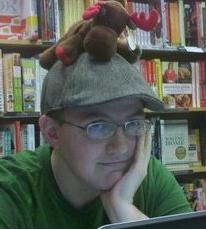
    A. F. Grappin is a general creative who mainly focuses on speculative fiction and crafting.

    ​That's me down there.

    Picture

    Archives

    February 2026
    January 2026
    December 2025
    November 2025
    October 2025
    September 2025
    August 2025
    July 2025
    June 2025
    May 2025
    April 2025
    March 2025
    February 2025
    September 2019
    September 2018
    May 2018
    March 2018
    October 2017
    August 2017
    April 2017
    November 2016
    August 2016
    October 2015
    May 2015
    March 2015
    August 2014
    May 2014
    April 2014
    March 2014
    February 2014

    Categories

    All
    Assassin
    Audiobook
    Autograph
    Balticon
    Blog Post
    Book Release
    Book Review
    Convention
    Cover Reveal
    Creativity
    Criminal From Birth
    Faire
    Festival
    Fiction
    Improvement
    Inspiration
    Literature
    Luc Bertrand
    Monthly Update
    Novel
    Opinion
    Outlining
    Plans
    Progress Report
    Projects
    Public Appearance
    Quest
    Reading
    Reading List
    Real Life
    Renaissance
    Renaissance Festival
    Roleplaying
    Roll Your Desting
    Short Story
    Speculative Fiction
    Starsigns
    Status Report
    Tennessee Renaissance Festival
    The Statford Chronicles
    To-read
    Updates
    Vampire Needed
    Writing
    Writing Technique

    RSS Feed

Site powered by Weebly. Managed by Bluehost