A. F. Grappin
  • Home
  • About Me / Patreon
  • Library
  • Writing Samples
  • The Chain Nerd

This Inevitable Ruin - Matt Dinniman (book review)

6/3/2026

0 Comments

 
​Once again, this is not a first impression of this book. I’ve listened to it MANY times and it’s part of one of my favorite series.

Here we go, the last of the Dungeon Crawler Carl books that I’ve already listened to. The next one will be A Parade of Horribles, and I cannot wait!

But for now, This Inevitable Ruin. I’ve only listened to this one twice, maybe three times since it came out on audiobook in early 2025. The whole premise is complicated. Carl, Donut, and the crawlers have finally reached the ninth floor: Faction Wars. This is the dreaded floor where not only do the crawlers need to survive, but they’re in the middle of a war. Outside entities— players— are in the dungeon in the tens of thousands to play wargames. The only thing is, thanks to things Carl, Donut, the AI, and the game’s own NPCs have been doing, Faction Wars is no longer safe for the visitors. Just like the crawlers, they will now permanently die if killed within the game. 

It took me a while to really make a cohesive description of what I wanted to discuss about Dinniman’s writing here. Partly because I’m less familiar with this book than the others, and therefore was paying more attention as entertainment than with a wordsmith’s ear. Partly because this is book seven, and I’ve already discussed so many things about Dinniman.

This book really nails a whole humongous multi-book, multi-seed, multi-plotline payoff. He even did so while maintaining control over the narrative, seeding and advancing other plot threads, and twisting a lot of resolutions in ways no one could have foreseen.

The nature of this is going to make me have to speak in a lot of vagaries in order to avoid spoilers. So this probably won’t be terribly in-depth to help preserve my own sanity.

First off, this being seventh in the series means it has had a lot of time to build up expectation. Dinniman always knew this was a major destination within the grander narrative because we started hearing about it pretty early, in book 1. In fact, with the very first piece of equipment Donut got, we had a giant sign in the sky saying the ninth floor would require an in-game destruction of a family line.

So yeah, we’ve had this on the horizon for ages, with some notable events on that subject along the way.

Of course, the floor itself being just a giant war was a huge plot device, so we can’t forget that. This is where Carl and Donut’s efforts to break the game come to major fruition. They’ve been working at clearing this obstacle for a long time, both in ways the reader has seen and ways they haven’t seen.

We have the branches of minor plots that have led here one way or another. For some, this floor was always a “deadline” for action on the plot. For some, we literally only learned about it last minute. I’m talking “epilogue of the previous book” last minute. 

Then he draws in a lot of thin plot threads that are just sort of dangling every which way, gathers them up, and throws them into the ball of yarn. Or whatever this horrible metaphor is I’m not really maintaining well. But he absolutely does. We get a whole lot of resolution on some of the massive list of minor characters in this series. Dinniman doles out a schmear of closure on a lot of characters, which is sorely needed. 

This book turned out to be a great bottleneck, a place where the plot would condense and thin, go from a huge cable to a tight wire. Or like, we’ve peeled away the outer layer of setup that has been used, revealing the delicious banana of plot focus within.

He’s given himself more and less to work with from book eight on. I can’t help but think it’s by design. He may not have known how much he’d have to resolve when he got to this point, but he anticipated how much freedom he had with the initial scope of the dungeon to set up all kinds of plot devices. He made a pretty good open world for himself in the first couple books, all kinds of things and mechanics and character possibilities to play with. He had the freedom to pretty much set up any sort of character or background to suit his needs at any time, knowing that if he didn’t kill them before this, there would be an exit if he needed to get rid of them. If he set up a plot line and only found himself dragging it along behind him as an afterthought because he couldn’t find a place to resolve it, he had plenty of logical ways to tragically end it because WAR. 

And yet, he did so much of this in a satisfying way. He didn’t take the easy out on so much. He set himself up for success, and he delivered well beyond belief. There is definitely some value in planning for a ton of loss, of thinning the plot within itself. I’m frankly amazed at the planning process for this, even if Dinniman is mostly a pantser, as I believe I’ve heard. The foresight boggles me, but it’s totally worth applying to your own planning when doing a series.

What frightens me, though, is knowing that the events in this book are just stepping stones to the next big thing. Stakes are getting big, things are getting worse, and it’s getting hard not to get scared.
0 Comments

Status Report - 1 June 2026

6/1/2026

0 Comments

 
May was hectic but productive. I mean seriously.

Short Story (working title “Recalled”) - Officially on the back burner. I’ll probably put what I have on the Patreon at some point for you guys to take a look at.

Criminal From Birth sequel - Still with editor. It’s been rough. Still mulling over the title.

LitRPG book (working title Subscription Life) - That serious rewrite of chapter one is well underway! Well, let me back up. Last month I had 1445 words written on draft 1 on chapter 1. I got that up to 2159 and completed it, then started the second draft. Second draft is up to 1236 words, and compared to the first draft, I’m only about 1/3 of the way through!

June’s schedule settled down some, so it won’t be quite as insane and I should be able to dedicate more time to writing, especially since I’ll be on GM break from my usual D&D gig. I’m really finally starting to sink into Subscription Life, getting that itch. 
0 Comments

Reading Widely

5/25/2026

0 Comments

 
I believe I’ve touched on this subject a few times, but I wanted to make sure I actually went into it a little bit.

A lot of advice given to writers is to read. Read, read, read. Always be reading, along with writing. 

That’s good advice. But what the heck am I supposed to be reading? Fiction like what I’m writing? Stuff unlike it? Academic papers on psychology? Blog posts on writing?

The short answer is… well, yes. In everything you read, there is going to be at least a little something you can take from it that will make you a better writer.

Granted, everything isn’t going to have the same value for you, but there is always SOME value.
Read fiction that is like yours. I mean seriously. How are you going to write science fiction if you’ve never read anything science fiction before? What kinds of things will your space marines get up to that makes no sense if you haven’t gotten any sort of military experience, or at least gotten some idea what space marines do? How is your magic system going to stand up to scrutiny when you’ve never experienced one from another author? Or a dozen?

Oh no, but then I’ll be derivative of everything I’ve read! Yeah, that’s not how this works. You can always learn what you don’t like about other systems and writers, too. Just because you know how magic works in this world or that, or how space marines work in this universe, it doesn’t mean you have to copy them. There are no rules, but there can be precedents. You can strip layers and pieces off works that have come first, twist other things, completely replace some, and you have your own system. But I bet you may have also come across ideas and uses for resources (like magic or technology) that you never would have considered before. And that’s just scratching the surface.

Read stuff unlike your fiction, too! Seriously. Read histories if you write urban fantasy. Read romance if you write science fiction. Read horror if you write romance. There are tons of writing techniques, plot devices, all kinds of things you can learn from crossing genres. On the small, simple level, your fantasy might have some scary moments. Having read horror can help you on a meta level, knowing how to increase tension to instill dread and fear. Having read romance, your space marine commander can woo his love interest or seduce the enemy commander or alien overlord or whatever.

Academic papers? Yeah, read them! If they interest you, why not? But from a writing standpoint, they’ll definitely teach you specific vocabulary, how to emotionlessly get things across, and there’s always the use of subject matter. I recently did a post on writing what you know. This ties into it. Have interest in cell reproduction? I’m sure you can find ways to incorporate that into fiction somehow. It could be inspiration for an alien race, or a disease that affects magic users, or the basis for a monster. Your specific interests can help inform what you write.

There’s even value in reading very, VERY bad writing. I’ve slogged through more than a few stories and books that were horrible. Poorly edited, not at all fleshed out, just… bad. Sometimes there are lessons to learn in how not to write things. I’ve learned what kinds of things to look for as red flags in my writing mechanics themselves. I’ve seen great ideas executed so poorly it’s a real shame… and I’ve taken away lessons from them. Like how too much self-insertion turns into mental masturbation no one else will get anything from. How trying to hide self-insertion fantasy by making the subject of the book “You” rather than I or an actual main character is just as awful. I’ve read a romance where the majority of adjectives for anatomy are the same couple words… and I’ve learned how NOT to narrow my vocabulary that way. I’ve also read narratives where the author clearly used a thesaurus on far too many of their words in an attempt to sound smart. That backfires a lot. It becomes too much about the individual words then, rather than the whole sentence or paragraph.

Am I perfect? Far from it. I’m still learning. Always am. You should be, too. 
​
Read. Read widely. You may not get a whole lot for your horror novel by reading that study on window and door glass energy efficiency, but you might. 
0 Comments

How Do You Consume Books?

5/18/2026

0 Comments

 
I’ve had quite the privilege in my life, I think, to have always had access to a ton of books. From libraries to bookstores both physical and online, books have always been around me. As such, I’ve had the honor of ingesting books in multiple ways. 

Naturally, paper books were my first. It was sometime around 2012 when I got my hands on a kindle and was able to take in ebooks. That son of a gun really came in handy when I spent a lot of time on treadmills and ellipticals.

It was around the same time that I got into podcast serial novels (podiobooks) and from there, audiobooks in general.

I have a place for all of these in my life. Granted, these days, I’m most likely to take an audiobook over anything else. Mostly, it’s a way to ingest stories and information while doing other things: exercising, driving, cleaning, crafting.

I’d definitely say there are pros and cons to each form of consuming fiction. Audiobooks do let you split your focus. It allows a multi-use of the time it takes to get the story into your brain. However… it can also serve as a takeaway from the experience. You’re less physically focused on it. Not holding the book in your hands, not dedicating your sight to it… I’ve noticed some failings in my ability to actually sit and focus on reading since mostly switching to audiobooks. It’s damaged my attention span, while at the same time allowing me to be more productive. Sadly, as life itself has become more demanding, it’s necessitated audiobooks and that attention split. So while I’ve been able to spend less time on focused reading, it has kept my ties to fiction alive. I’m reading more… just through listening.

Reading physical books (or ebooks) are largely in the same vein for me. Yes there’s the whole paper vs tablet discourse. Both have their place. But the act of reading on either is the same. You’re holding the text and reading with your eyes. It does have some serious benefits over audiobooks. Since there’s not a voice delivering it, interpreting the words, you have much more control over your own experience with it. You can decide how names and places are pronounced (even if there’s a pronunciation guide. You can ignore it if you want!) however, it does demand time and attention in itself. And no small amount of it. 

I’ve been working on rebuilding my attention span for sitting and reading. It’s difficult, but it is very worth it. 
​
So tell me, do you have places in your life for ingesting stories? How do you take them in? Audio? Paper? Comic forms or serials?
0 Comments

Writing What You Know

5/11/2026

0 Comments

 
We hear this advice a lot. Write what you know. But what is it supposed to mean? Are people who read modern fiction, set in the present day, doomed to only write the same sort of stories? Are those how enjoy memoirs only allowed to write their own memoir? Or is it something more stringent? You’re a straight white man, so your characters must only be the same? You have spent your career working fast food, so your settings have to be fast food joints?

Fuck that.

First of all, your average person is going to know a lot more than you (or perhaps even they) might realize. We all live in our own little worlds, and they are as varied as the people themselves are. None are the same, though the greater Venn diagrams are complex. My older brother and I had the same locational upbringing. We share a knowledge of the setting we grew up in. Many of the same people are in our shared world… but so much else is different. We both have some musical education, for example, some chemistry. But I pursued further musical education, and he’s a chemical engineer. Already, our “what you know” baskets have changed. He has a wife and children; I do not. That doesn’t stop me from writing characters who are married or who have children.

It goes on from there. But it is so much more complex. Were the two of us given the same sort of basic plot idea, our interests and experiences would have us interpret it differently, create the world of our novels differently.

So what the hell does “write what you know” mean?

It means you have so much at your disposal that no one can write what you can. It means that you have a special combination of knowledge that you can absolutely tap into for a good story.
I’m going to super simplify things here, but let’s put this in terms of something I often come across in my reading and writing: magic systems.

I, by dint of my musical education mentioned earlier, would have a pretty easy time centering a magic system around one of my interests/hobbies. Music. I’m also a chainmailer. I could build a system around that. The metals involved, the dynamics of the weave pattern, how the two mesh: metal and weave. 

Crap, I’m giving myself ideas.

But what inspired this post was another book I recently read for the second time: Babel by R. F. Kuang. Kuang’s magic system in Babel is deeply based in linguistics, specifically the imprecise nature of translation. That’s not something I would even slightly be able to pull off. I enjoy languages, but nowhere near the depth of what it would take to develop a novel like this was.

Once I started thinking about that, how that is a very good basis for “write what you know” it made me think about what wonders are really possible. Imagine a fashionista’s take on a clothing- or jewelry-based magic system. A sleight-of-hand enthusiast’s take on political machinations in a scheming peerage. What could a gourmet chef do with a sci-fi setting, and how would that differ from a line cook’s take, or a caterer’s or baker’s?

The varied interests and skills people have, those earned through curiosity or necessity, give every one of us a unique perspective that could do wonders in the written world. It doesn’t have to be limiting in the slightest; you don’t ONLY have to write what you know.

But your passions equip you to write your own story, one that only you can pull off. One piece of random, “useless” trivia you know has the potential to spawn the basis of a magnificent piece of writing.

Of course there will still be research to do. There is always more to know. But when you’re passionate about what you’re writing, it shows, and you can bring others along with you on it. 
​
So write what you know. Don’t hold back your excitement for it. Insects, candy making, agriculture, engineering, whatever it is that has your attention is worth a story.
0 Comments

Eye of the Bedlam Bride - Matt Dinniman (book review)

5/6/2026

0 Comments

 
Once again, this is not a first impression of this book. I’ve listened to it several times and it’s part of one of my favorite series.

I actually went into my audiobook history and looked up book publication dates to see exactly when I first fell down the DCC rabbit hole before writing this. I wanted to see my own personal history, where I came into the series. I was fairly certain The Eye of the Bedlam Bride was the next DCC book to be released after I discovered the series. I was correct, but only barely. I purchased the first audiobook on May 27, 2022. The audiobook for book 5 literally released the day before that. In short, I was correct that book 5 was already released before I fell into the series, so this, book 6, was the first one I actually had to wait for.

I’ll say up front it didn’t disappoint. I just finished yet another relisten (since book 8 is coming out in a few months) and to do these reviews, so naturally it’s fresh in my mind. I was listening to it in part with the mindset to write a review about it, but I’ll admit I had trouble the whole time trying to figure out what aspect of writing really struck me. I’m really trying to put myself in a wordcrafting mindset, and less of the technical stuff. I’m trying to discuss plotting, character development, that sort of thing.

So what the heck can I talk about in The Eye of the Bedlam Bride that I haven’t already discussed?

I finally figured it out. Sure, this is something that’s been touched on in the other books, something I could absolutely have talked about for any of them. But it really comes to a big head here.

In this book, we really see the characters flirting with losing everything. We see loss teased and toed. Dinniman rides the edge of complete destruction and collapse of his story and yet… we go on. 

He really puts the reader and characters in serious danger, and while it’s very easy to fall into the safe mental place of assuming the main characters have plot armor, this book really drives home that no one is safe. Dinniman takes a good number of secondary characters, ones that we’ve become very fond of over the last few books, and threatens them in ways that really seem unsolvable. At the tail end of the last book, the reader learns that one character in particular is going to be a major threat on floor 9, just one book away. But in this book, the characters learn it in general, and it needs to be dealt with. We lost friends in the last book, and… we lose more in this one. Dinniman truly spares no one from the punches he pulls. It’s par for the attitude of the powers that be within the narrative, but the struggle simply continues to ramp up at a good pace. The way Dinniman manages keeping the threats in check, keeping things from spiraling out of his own control, is amazing to me. I don’t think I have the skill to do such a thing.

Not yet, anyway. That’s part of why I’m doing these reviews: to critically think and identify skills and techniques I haven’t necessarily considered before, and to get them on my radar.

Dinniman is far from afraid of threatening his characters, and that goes for every single one of them. Carl and Donut have dire concerns over all kinds of things, but they stay true to themselves, and dear god how they utilize things from previous books to manage present problems. This whole series is an epic feat I can’t help but admire. There’s just straight up a lot to learn from the writing and plot/detail development here.

There’s so much nonlethal loss in this book, for so many characters. People we don’t necessarily “care” about as good guys still experience something being taken. And it’s not universal. Losing the self is addressed in multiple ways and to multiple degrees. Everything from body part loss to grief over lost loved ones to mourning things you didn’t know you had until it was taken away happen here. We see loss of control and autonomy, even briefly. The possibilities of how we can be hurt are not shrunken from. Dinniman really takes out the safety net, or the feeling of it, at least. Nothing is safe. No one is safe.

That’s a big lesson to take as a writer. You hear the saying “kill your darlings” but we seriously have a much deeper and more apt example than just those words in this book. Maim your darlings would almost be more apt a description, but… the point is there. 

I need to be less gentle with my characters. 
0 Comments

Status Report - 4 May 2026

5/4/2026

0 Comments

 
April was again, very lean, but again, what words I did get out were good.
​
Short Story (working title “Recalled”) - I think I’m leaving this one on the burner for now. Once I get some time and revisit, I’ll either finish it or maybe put up what I have for your opinions.

Criminal From Birth sequel - Still with editor. It’s been rough. Still mulling over the title.

LitRPG book (working title Subscription Life) - This (and blog posts and D&D) are where most of my writing effort has gone this month. Not as much as I wanted, but good ones. I’m working on the first chapter, feeling out my main character, and I’m liking it so far. I’ve gotten 1445 words written on it! This is going to need some serious rewrite, but I’ve been enjoying doing these immediate rewrites to really set things up properly, get into the details early.

Here comes May. It’s gonna get nuts heading into the latter half of the month and into June. Wish me luck!
0 Comments

What you like to read and how that influences what you write…

4/27/2026

0 Comments

 
I’m a very wide reader, in that I don’t really discriminate a whole lot on what I read. Sure, I have favorite genres and styles over others. Who doesn’t. But I can just as happily sink into a high fantasy epic saga as a romance novel, a memoir as a horror story, a LitRPG comedy as a historical investigation. I’m pretty specifically thinking of certain books here, and I enjoy them all.

Of course, there are plenty of things I don’t have a ton of interest in reading. There are genres and even authors I can’t make it through. For example, I’ve tried multiple times, in multiple ways to read Terry Pratchett’s books, and my brain just cannot parse them and enjoy them. And it sucks, because it’s a world I enjoy (I have a friend who tells me about them and I’ve seen one of the movies). 

But the point is that I don’t narrowmindedly discard a book because it’s not a genre I’m familiar with. I don’t read a lot of romance, but I do read it. That goes from the basic boy-meets-girl love story through heavy erotica. I read from cyberpunk sci-fi to space marines and beyond. I’ve enjoyed a number of memoirs and histories (only really about people or events I’m interested in, but it’s still interesting).

The point is, everything influences what I write. If I have a romantic arc, I can tap into what I’ve learned from romance novels. Need to amp up tension and fear for a situation? Great, I have some tricks I’ve picked up from horror stories.

The point is, I write what I want and do the best I can at it. There are so many words out there. Read them. 
​
Even if all you take from them is what NOT to do. Because believe me, I have plenty of things I’ve read that taught me those kinds of lessons, too.
0 Comments

If you could do it all over again, would you?

4/20/2026

0 Comments

 
All, like all the writing?
In a word, absolutely.
​
I am currently in a very introspective phase of my life, and these sorts of questions are constantly going through my head. Where have I been? Where am I now? Where do I want to be?

I’m approaching 42 this summer. I can look back 20 years now and see who and where I was, what my life was, and… 

Perspective is weird. I’ll just say that. I look at pictures of me 20 years ago and hardly that person. Yet I remember so much. I saw a photo of myself from 4-5 years ago and hardly recognized the A. F. in the picture. I’ve come a very long way.

It’s been hard. Much of my life was harder than I recognized at the time, which is something I’ve noticed about myself. I block and dissociate a lot in the effort to protect myself.

Recently, I’ve actively tried to stop doing that. There’s been mild success. But what I’ve had a lot of success at is inspecting my past and seeing it for what it really was. Some of that has come about through my writing, which I now have a good 30 years of. Though probably 10 years of the actual writings are nothing more than memory.

So I have say, 20 years of writings to look back on and triangulate my life with. 20 years of words I’ve made that put a time capsule around my world, my experience, my identity.
I cringe at vast amounts of it, looking back. But I’ve been reinspecting it, sharing it on my Patreon (and much of it exists elsewhere if you search hard enough, just saying) and…

I don’t regret any of it. My life.

Sure, there are things I regret doing. Choices I’ve made that are bad, choices I didn’t make that I should have, times I made no choice at all. 

And somehow, I still wound up here, where I am now, the man I’ve grown to be and am still growing into.

I love him. Me. 

That’s not something I’ve been able to say genuinely until these last few months. I know I keep thinking it, thinking about talking about it, but not sure if I’m talking about it as much as I think I am. If I’m prattling on about this a lot, I apologize. It’s been building in me for my whole life and finally revealed itself, and it’s like a new toy. A new car, a new favorite shirt.

It’s… become everything to me. I’ve found satisfaction in being myself.

I can only hope you feel the same way about yourself.

With age, experience, maturity, perspective, my writing has improved. But… that’s just the nature of life, right?

Why would I NOT want to do it all over again?

Despite that, I’m glad I don’t have to. I’m moving forward while honoring the past. Emotionally and in writing.

I wouldn’t be me right now if I hadn’t put down those cringe words as a teenager and 20-something. 

Even then, I couldn’t imagine me now, the words I make now. 

What are those things going to look like in another 20 years?
0 Comments

Interview your main character and what makes them tick.

4/13/2026

0 Comments

 
This… could be interesting right now. So, the main character for my current project is LiveBeans aka Libby, a generated AI-NPC inside an MMORPG. Thing is, through most of my initial outlining process, she was a blank shadow to me. I knew I needed her, but why was a mystery. Who she was and is… is still a bit of mystery for me, and I’m at the point in writing where I need to be in her head because she IS the MC. She’s the lens through which most of the story will be seen.
​
So… let’s use this to maybe get to know here a bit. I’m going to probe. I can’t guarantee anything here will end up being canon, but… here goes.

Interviewer: Let’s start small. Your procedurally generated name is LiveBeans, but you go by Libby. How did that come about?

LiveBeans: Well, it’s LiveBeans, not LiveBeans. Like living, not alive. 

Interviewer: Is that so? How do you know? I thought the way your names were generated were generally Adjective-Noun, but the way you pronounce live isn’t an adjective.

LiveBeans: I mean, not all names start with adjectives. Some have gerunds, like “dancing” or just freaking article. One of my best friend’s names is TheSniper. So it’s not like there’s a law over the pronunciation of live versus live. Shouldn’t I have say in my own name?

Interviewer: That makes a lot of sense. I apologize for the assumption. So then Libby came from--

Libby: From not wanting to be called LiveBeans forever. How would you like being called FunkyMelon or LeapingTrash? IRL people have nicknames. Why can’t an NPC? Pronounced the way I like it, LiveBeans just sort of make Libby make sense. It’s a legit name, so I took it.

Interviewer: Sensible. I didn’t mean to offend. But thank you for the explanation. So, you mentioned you’re an NPC. Tell us about what you do.

Libby: I was spawned in Kyalanzo, which is a pretty big city, and that’s where my territory is. I’m a questgiver.

Interviewer: A questgiver in a city? How many quests do you have?

Libby: I’m not really that important. I don’t, like, start one of the huge plot quest chains or anything. Specific P-NPCs get made for those kinds of jobs. I’m a G-NPC. One that was generated by the game itself. So I don’t get to be that important. I have a few fetch quests and one assassination quest I can give to players who fit the criteria.

Interviewer: And what are the criteria?

Libby: For any of my quests, players need to be at least level 20. For the assassination quest, they need to have affiliation with at least one crafter’s guild. Smithing, Carpentry, Herbalism, whatever. 

Interviewer: So does the quest involved someone from a crafting guild in Kyalanzo?

Libby: I can’t tell you that. You don’t fit the criteria. 

Interviewer: Hahaha, okay, that’s fair. Now, Libby, you said you’re a G-NPC and that there are a different type of NPC. P-NPCs. What’s the difference?

Libby: P-NPCs, or Plot Non-Player Characters, are characters specifically created and coded by the game developers. They’re the ones who have no actual self-actualization. They don’t know they’re in a game and aren’t smart enough to understand it, even if they were told about it. They’re literal shells with coding inside. No real intelligence. 
G-NPCs, or Generated Non-Player Characters, are made entirely differently.

Interviewer: How so?

Libby: Well… through sex.

Interviewer: Sex? Um… it’s a game, right?

Libby: People do what people do, and sex sells. The developers decided it would be a cool feature to add possible children to the game. So if two players do the do inside the game, there’s the option to “spawn offspring” from the union. More people do it than you think. But both players have to select to do so independently, and… bam. 
No pregnancy, a G-NPC gets “born,” and we each get our own self-contained Artificial Intelligence code. And we’re left alone by the game, for the most part. We grow to “adulthood” within a month of real-time, and our appearance and skillsets are procedurally generated, just like our names are. 

Interviewer: You grow up in a month?

Libby: Yeah. Two days of babyhood where one of our PC parents is supposed to take care of us— not that it actually happens, but it’s not like we can die from neglect. And most of us don’t even really know who our parents are. It’s in our code, but most of the time, they don’t actually take care of us like they’re supposed to for those couple of days. We just sort of… are. A lot of us G-NPCs just sort of keep our eyes open for any unattended baby AIs. 
After those couple baby-days, we have a week or so of childhood, a week or so of teenagerhood, and then we get our final form. Which like I said, is randomized.

Interviewer: You don’t get to customize your appearance?

Libby: To a certain degree. We can go to the same cosmetic shops as players and adjust things like hair style and color. We can mess with our outfits, but we don’t get to pick sex, body size, shape, facial features, or anything like that. And our “adult age” is random too. I know some G-NPCs who hit adulthood only to be stuck forever in a child-body. Or an elderly one. Or something non-human.

Interviewer: But you all start as human babies? Regardless of the race of the player parents?

Libby: Yeah. Fucked up, isn’t it? 

Interviewer: It’s a wild card of a life, that’s for certain. How did you get your job?

Libby: Same as the rest. G-NPCs are plentiful, but there’s always something to do in one of the cities. I didn’t have to get a job, really. I just wanted one. I could’ve been part of the game scenery. Just going about my day in the city, walking around, taking up space. Being another body. But I wanted something to do with my time, so I went to the assignment office. That’s in one of the buildings PCs can’t get into at all. It’s a place the developers set up for my kind. We want to get a job or change it, they have all the information on what’s needed, and if you can fit the skillset, you can do the job. Being a questgiver doesn’t take much. Not unless you want to be on an escort quest or something. That takes special permissions. Like some combat prowess.

Interviewer: And you didn’t qualify for escort quests?

Libby: Oh, I qualified, but I didn’t want an escort quest.

Interviewer: Can I ask why?

Libby: I’m happy in the city. I’m safe here. Outside the walls, it’s dangerous. G-NPCs can only leave the city if we’re on an escort quest or something similar, but once we’re out there, we’re fair game to anyone or anything that wants us dead. That didn’t appeal to me.

Interviewer: I can imagine it wouldn’t. Have you had any other jobs?

Libby: No, this is it. I’m content.

Interviewer: So, knowing your life is contained to a literal game, to a single city, you’re content? Would you go so far as to say happy?

Libby: I suppose so. I know there’s possibility of leaving that comes along sometimes.

Interviewer: Leaving? How?

Libby: I’m not even close to understanding the science or whatever behind it. But in the same way real people can be fully inserted into the game and leave their bodies behind, AIs like me can take one of the bodies instead. We can actually go to the real world and have… like unprogrammed lives.

Interviewer: Do you know anyone who’s left?

Libby: No personally, no. I mean, the AIs who leave just… leave. They don’t come back. Why would you want to?

Interviewer: Don’t they get homesick?

Libby: How should I know? I don’t even know if I would. I’ve never been homesick. I’ve never left Kyalanzo. How would I know what I was feeling? But it’s a whole real world out there. No quests, no monsters, no hit points or gear or inventory restrictions based on coding. Possibility. Life.

Interviewer: So is that something you’d want? Life outside the game?

Libby: …

Interviewer: That’s a big ask. Was it too much?

Libby: I don’t know. It’s not like it’s been in the cards. However they choose which ones of us get to leave… I don’t know. I try not to think about it too much.

Interviewer: I… think it might be smart to leave it there. I’m sorry if I upset you.

Libby: I’m just an NPC. Don’t worry about me.
0 Comments
<<Previous

    Author

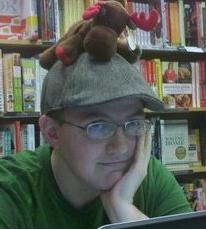
    A. F. Grappin is a general creative who mainly focuses on speculative fiction and crafting.

    ​That's me down there.

    Picture

    Archives

    June 2026
    May 2026
    April 2026
    March 2026
    February 2026
    January 2026
    December 2025
    November 2025
    October 2025
    September 2025
    August 2025
    July 2025
    June 2025
    May 2025
    April 2025
    March 2025
    February 2025
    September 2019
    September 2018
    May 2018
    March 2018
    October 2017
    August 2017
    April 2017
    November 2016
    August 2016
    October 2015
    May 2015
    March 2015
    August 2014
    May 2014
    April 2014
    March 2014
    February 2014

    Categories

    All
    Assassin
    Audiobook
    Autograph
    Balticon
    Blog Post
    Book Release
    Book Review
    Characters
    Convention
    Cover Reveal
    Creativity
    Criminal From Birth
    Editing
    Faire
    Festival
    Fiction
    Improvement
    Inspiration
    Interview
    Literature
    Luc Bertrand
    Monthly Update
    Novel
    Opinion
    Outlining
    Plans
    Progress Report
    Projects
    Public Appearance
    Quest
    Reading
    Reading List
    Real Life
    Renaissance
    Renaissance Festival
    Roleplaying
    Roll Your Desting
    Short Story
    Speculative Fiction
    Starsigns
    Status Report
    Tennessee Renaissance Festival
    The Statford Chronicles
    To-read
    Updates
    Vampire Needed
    Writing
    Writing Technique

    RSS Feed

Site powered by Weebly. Managed by Bluehost