A. F. Grappin
  • Home
  • About Me / Patreon
  • Library
  • Writing Samples
  • The Chain Nerd

Status Report - 6 April 2026

4/6/2026

0 Comments

 
I legit don’t know where March went. Between a sudden theatre tech gig that took up most of a week and prepping for con season to really get going, I didn’t manage as much writing as I wanted, but I’ll say the writing I did do was good.

Short Story (working title “Recalled”) - No updates this month. Still at around 1800 words. Crap. This makes two months in a row. I’m at the point I need to go reread what I’ve already done and decide if I actually want to pursue anymore.

Criminal From Birth sequel - Still with editor. It’s been rough. I might have a title though.  Still haven’t decided.

LitRPG book (working title Subscription Life) - I only managed to write one more scene, though once again, I wrote it twice. First version was 448 words, second was 781 and again, so much better. More full.

So we’ll say 1224 written on it. I need to do better. My time is about to be at a premium come May, so I really hope to make April better for word-making.
0 Comments

The Butcher's Masquerade - Matt Dinniman (book review)

4/1/2026

0 Comments

 
Once again, this is not a first impression of this book. I’ve listened to it MANY times and it’s part of one of my favorite series.

We’re working our way through the series, aren’t we? Going to be interesting when we get to the latest book, because that’s going to be a first impression. Comes out in May, so by the time we get to its release, timing-wise, I should be able to get it, listen to it, and write my review before it needs to be up here. 

Anyway, for now, we’re on book 5, The Butcher’s Masquerade. I was nearing the end before I finally figured out what aspect of writing and storytelling I wanted to focus on for it, but it jumped out at me pretty suddenly when I started thinking about it. For this book, it’s a matter of meta-storytelling, what exactly happens in this book that made me want to have a discussion. 

This is a major turning point in the series. The Butcher’s Masquerade is the book where our protagonist, Carl, finally makes the switch from reactive to proactive.

In simpler terms, this is when Carl stops being recipient to events and starts taking action to create events. This is the book where Carl takes the future into his own hands and starts directing the narrative himself, as much as he can. More than anything, it’s when he begins rebelling against the system in earnest, taking direct action and having a plan in place, rather than taking opportunities as he sees them. Carl has finally gotten to a point he cannot just sit and accept unfairness anymore. 

I’m going to try to avoid detailed spoilers, but no promises. So proceed with caution.

This book is the one where he starts exploiting his position, most notably his audience. The advantages his new adversaries on this floor, the Hunters, have is something he calls out right away. Knowing he’s being watched (and knowing the Hunters can communicate with the audience to get inside information on locations, skills, equipment, etc), Carl makes a quick point of complaining loudly about his opponents cheating. 

Even more shocking, he has plans from the very beginning to upset the “natural order” of how the game progresses on this floor. The Hunting Grounds is where real people from the galaxy outside the dungeon come to gather equipment and experience for the future game coming in a few floors. These “guests” can actually die here, but a big part of their goal is to slay the crawlers like Carl and his friends. They won’t be released until the first day or so has passed, but that’s not stopping Carl. He refuses to run and hide like the crawlers pretty much always have to. Instead, he takes advantage of their laziness and false sense of secure superiority and attacks the outright, taking out a shocking number. 

It only grows from there. This is the book where Carl’s true goals start to show themselves. He wants the “natural order” of things disrupted in every way possible. And he’s not just thinking of now, either. He’s looking at the long-term, the endgame. He’s working to break the crawl altogether, and Dinniman works to really tie a lot of threads together into a cable that does some serious emotional damage this book. Along with Carl’s anger and action ramping up, the harsh truth is it’s getting to the point damage done to Carl and the characters we’ve come to love up until now is also getting worse. We can’t help but lose people and even things we love. 

That’s really all I’ll say at this point. The last section of this book hurts. Stab after stab comes, and it’s a lot to endure. There’s a particular question from Donut that breaks me every time I read/hear it. I’ve felt that way, and I haven’t even been through a fraction of the shit Donut has to this point in the series. It’s so real, such raw emotion that I can’t imagine any sane person not choking up at what these characters are going through.

The transformation from reactive to proactive happens so gradually over the course of the previous book (The Gate of the Feral Gods) and into this one that I hadn’t really thought about it before now. But I’m glad I did. Carl’s conviction is really what solidifies, and the biggest moment I can think of to illustrate the difference comes from a moment in the previous book. SPOILERS FROM HERE, so be aware these will not be avoided.

I’m talking about Loita’s death. In the previous book, Carl didn’t decide until the pretty literal last minute to go through with his plan to try and off her. There was no hesitation about the attack on Zochau, which also killed real people. And a lot of them.

In short, this is where Carl’s agency finally makes that switch from responding to the world around him to fully taking charge and trying to make things different his way, rather than playing by the rules. It’s, like I said, almost so subtle a change that it’s hard to pinpoint. But it’s easy to accept because it’s so very… Carl. If anything, I’d say a lot of the shock comes from finding out exactly how alike Donut is, how she’s been doing things Carl doesn’t know about. Things along the same vein, but in a very Donut way.

Vive la révolution.
0 Comments

What would your protagonist say if you told them you were the cause of their story?

3/30/2026

0 Comments

 
Last week, I wrote about what some of my protagonists would say on meeting me, just as a person. 

I thought I’d take it a bit further and go into what they’d say if they found out I was their author/creator. Not just with protagonists, but other characters I enjoyed writing or thought might have an interesting reaction.

There may be some spoilers in my impressions, so throwing that out there.

Almo (secondary protagonist from Starsigns)

“This is your fault?! You did this to me?”

Almo is one of the characters I honestly think would have a big beef with me at first, but once we talked, would get it. Partly because Almo is a child, partly because Almo is very much sharing a core of my own circumstances. SPOILER - Almo is actually Almira, only because they received a fate they didn’t want to have. Almira thought that simply living as a different person would change that fate, so she started living as a boy. On a very basic level, Almo would get me, I think.

On a personal level, I think she’d understand.

Luc Bertrand (protagonist of The Deadly Studies)

“I wish I could say I was surprised that some metaphysical, multiversical being or whatever had set all this in motion, but I’m really not. Just another god.”

Luc would be most jaded and accepting of being a character, I think. I’ve mentioned before that I didn’t create Luc, but I got to know him pretty darn well after writing 10 novellas about him. He’s surprisingly easygoing and accepting of weird ass shit going on around him. Comes with the gig of being an assassin and having the attention of some deific entities. I’m going with the Luc more towards the end of the series, not the beginning. Young Luc would lose his shit at being directly manipulated into action. The teenager he was would rebel quite a bit at realizing I’m the reason his family died.
Adult Luc would, I think, understand the reasoning. If nothing else, he appreciates a story and would eventually be amused in the long run by the thought that he was interesting enough to have books about him. Cynical, yes, but flattered.

Silen Bassis (protagonist of Criminal From Birth)

“…”

Silen would pose the biggest threat to me, and I wouldn’t blame him. I’ve given Silen a whole lot of shit to process and work through, and I’m not done with him yet. He’s got a severe temper and can be quick to violence whether he sees it as violence or not. He’s also not particularly forgiving, and he wouldn’t see me as even remotely useful. At best, I would get off being ignored and discarded. At worst, I’d be Leeched and left. Silen wouldn’t kill me out of his temper; he’s above that sort of thing. Mostly because he wouldn’t see me as being worth the effort or consequences of killing.

LiveBeans (protagonist of Subscrption Life)

“So you’re, like, the head game developer?”

LiveBeans, or Libby as she prefers to be called, would have a similar reaction to Luc, but with her own twist to it. She already knows she’s under the influence of entities not of a divine source. She’s an AI-driven NPC in a video game and is aware of her place in the world. She’d have no problem accepting and understanding how I fit into her life, but more than anything, I would see her caring less about it than Luc. Luc would at least be interested in getting to know me as a person, if only to try and understand why his story turned out the way it has.

Libby doesn’t have a whole lot of interest in humans. Rather, she’s not particularly interested in the types of humans she sees in the game. Players are far less interesting to her than other NPCs or just the world she lives in. So while she’d understand my role in her creation, she probably would have a whole lot of interest in me beyond that.
0 Comments

What would your protagonist say if they met you?

3/23/2026

0 Comments

 
I’ve had the idea for this post in my list for some time now, but I’ve been neglecting to write it for two big reasons:

One, I don’t have a firm grasp of my current protagonist yet. I’m talking about a character currently named Libby, the protagonist of my main project, Subscription Life. I knew I needed her, but very nearly the entire time I was outlining the story, she was a massive blank. It wasn’t until toward the end of the outline that her real purpose finally struck me, so that’s part of what I’ve gone back to add into to the first third or so of the outline. But as of writing this post, I haven’t actually written any prose involving her yet (I’m working on the prologue, which she isn’t in) so she’s still largely a blank to me.

The second reason I’ve been putting this off is because… well… it’s been so long since I read any of my other novels that I’m not as close to those protagonists as I once was. Sure, they’re old friends, but I really don’t know them so well as I once did anymore. Some… I don’t even necessarily recall the names of offhand, because it’s been so long out of mind or because I’ve had so many others I’ve created and cast aside as their projects were discarded.

Still, I’m going to bull forward now, stop making excuses, and go through some of my characters I do at least still have some sense of and at least come up with an initial impression they might have of me. Maybe I’ll revisit this in the future once I know more about Libby, but for now, let’s see who I’ve got.

WHAT I’D SAY ON MEETING A.F. GRAPPIN (as a person, not as an author)

Silen Bassis, protagonist of Criminal From Birth and its sequel: 

“So you think you’re special?” 

Silen wouldn’t say much, honestly, but he’d think a lot. Mostly he’d assess if I were a threat, how much of one, and how I might be one. He’d weigh what advantage he could get from having me as a possible tool he could use, but there would be no personal value assigned and definitely no attachment. Not even a friendship. Frankly, he’d probably hate me because I have a more positive outlook on life than he does despite my own trauma. He’s allowed himself to be consumed by it, rage against it specifically rather than grow despite it. We would not be friends.

Cair Gafford, protagonist of Starsigns

“Sure, nice to meet you too.”

Cair and my dynamic, as people, would be strained at first, mostly because of how much like me as a preteen he is. He’s got complicated relationships with most adults and would absolutely not trust me, just because I am an adult. Over time, we could absolutely get along, but the first meeting would be extremely tense. I would have to earn him, which would be totally worth it.

Luc Sebastien Bertrand, protagonist of The Deadly Studies

“Well, you could easily have been one of us, couldn’t you? Wait… no. Not in the long run.”
To be fair, as I’ve mentioned many times, I did not truly create Luc. John G. Walker did, but he gave me the freedom and honor of creating his backstory, which I enjoyed immensely.

Luc is probably the most layered, complicated protagonist I’ve written, and that man would see right through me immediately. Then again, he is a very strong observer and assessor of people, and he’d have me clocked as a schemer from the get-go. But he would also be able to tell I’m not assassin material. Unless I was one of their intelligence agents or a paper pusher. Luc and I could be friends, though a lot of our personal interests don’t align, except for… well, Dungeons & Dragons. On a nerd level and on an LGBT+ level, we would very much get along. Once we got into video games and stuff, we’d be able to hang out easily, but I wouldn’t see it being a friendship between us specifically. More like if we had shared friends, we’d be more likely to hang out in that context: larger gatherings. But we’d possibly gravitate toward one another in those situations.

That’s really about all I can get. Hallac from The Trials of Hallac and Selinde from Empeddigo are so far removed from my memory that they’re little more than outlines. And I don’t even remember the names of the main characters from Mere Acquaintances. 
​
I do plan to eventually do one about telling some of my characters I’m their author/god/whatever. Keep your eyes peeled for that eventually!
0 Comments

What’s the next book percolating in your head?

3/16/2026

0 Comments

 
​I’ve always got ideas percolating, and it’s a crapshoot on whether anything will actually get words put to it or not. Not just books, either. Stories in general. A lot of short stories get started and cast aside. That said, here are some of the ideas currently percolating.

Aside from my current novel project, Subscription Life, of course.

A short story about how laugh tracks were largely recorded 60-70+ years ago and we are constantly hearing the laughter of people long dead.

A short story or novelette about a blood casino, where one wagers blood rather than money.

I’ve been wanting for years to write a “Westarctican novel” centered around the micronation Westarctica that I’ve been involved with for almost 10 years now. I wanted to do a fantasy/magic/conservation kind of thing involving global warming, but now I’m reconsidering doing something fantasy-Bridgerton-esque. Social romance fantasy, but I don’t know if that idea will also end up petering out. It’s not one I’d pursue anytime soon, anyway.

I still want to get back to the magic item novel I was working on. But it needs a serious retooling in general.

Short stuff this week, but those are some of the ideas going on in there right now.
0 Comments

What is the last scene you wrote and how did you like it?

3/9/2026

0 Comments

 
As of right now, the most recent scene I’ve written is the prologue for Subscription Life, and I have mixed feelings about it. It’s incomplete, in that it’s not as… girthy as I want it to be yet. I feel like it’s just skimming the surface of what it could, should, and eventually will be.

That is what editing is for, but I’m honestly not terribly satisfied with it. The main content is there, but it feels… thin. Translucent, like a veil that only kinda shows what’s underneath it. 
I’m not displeased by any means. I’m just not too particularly happy with it. 

The thing is, I’m finding out this is a regular tendency of mine, and it’s one very much at the forefront of my consciousness as the next big personal improvement project I’m going after. 
I don’t commit like I should.

I’m overly cautious, afraid to take real risks with things like I should, too afraid to fail or fall short. This goes for pretty much all my creative endeavors. I’m an okay singer, an okay actor and voice actor, an okay author.

And I’ve been stuck in that “okay” range, at least as far as I can tell, because I hold back because it’s safe. I need to push boundaries more. I need to be okay with failing and doing something again, trying again.

I don’t like rewriting. Even most of my edits are more about word choice and correction. I never really try writing bits of scenes again, and that honestly feels like a pretty big confession for me. Thing is, I KNOW I can do better. I am well aware some of my stuff is extremely bad or lacking. 

Pride is a funny thing, and I’ve both let it rule me and cast it aside arbitrarily in odd ways that don’t really make sense to me. At least I can say it’s not like I write things and want to be able to brag I get it right the first time. That’s a whole level of hubris I’ve never seen the draw of. No one’s perfect.

But I’ve accepted too far in the opposite direction. The okay. The bare minimum. I can do so much better. 

I want to take more of these risks. I want to improve. This is the only way I can, at this point. I need to stop being okay with just getting the idea out on paper and spend more time criticizing where I’ve played it safe as an artist.

I need to not be afraid of failing, of looking stupid or incapable, even if it’s only to myself. Because let’s face it, I’m the one I’m failing to please here. I’m not judging myself that way, but I am still allowing my own self-image to accept what’s not good enough for me. 

I deserve a better me. I want to be him. 

I’m gonna go reread that scene and really tear it apart.

UPDATE: After I initially wrote this blog post a week or two ago, I did go and straight up tried again at the prologue scene. Initial draft was around 1150 words. Second attempt was 1000 words more than that. I did reuse a few sentences I liked, but I tried to cut loose a bit more and really go for it. I have to say there was a marked difference. The new version is far more dynamic and interesting. I know I still can go further, but... yeah. This is the right direction!
0 Comments

The Gate of the Feral Gods - Matt Dinniman (Book Review)

3/4/2026

0 Comments

 
Once again, this is not a first impression of this book. I’ve listened to it MANY times and it’s part of one of my favorite series.

Already up to book 4 of the Dungeon Crawler Carl series, and it wasn’t until a good halfway through that I figured out just what I wanted to discuss from a writerly standpoint on this novel.
Time skips. Missing out.

So, one of the big points of stories is to put the consumer in the middle of the action. We want immersion, to be the hero or villain as the mood strikes us, to feel the emotions, hear the sounds, experience the action. We want to be in the story, to know every bit of activity that's going on in the world around us.

That's why when something is left unknown, it's either a huge thorn in our sides, a tease, or a crime. It's why we see movie scenes where the villain tells his master plan, even just to a minion. It's why we get the cheap "We all know that" exposition dumps to put things into context, and it's why we as the consumer get to know things the protagonist might not know.

It's also why it's such a great tool to use to build tension and stress in your readers (or viewers or listeners). Having your readers not having all the information can be priceless, but it's a very fine line to cross. My mind goes to Sherlock Holmes, where there are tons of details the reader simply cannot know, but the characters (Holmes, in particular) do know. Part of the charm of Holmes stories is in the role the reader plays. We're the Watson, the observer, and we get to experience the same wonder at deduction as those around the detective. It's heavy handed missing out there, but it's for a purpose, and one that suits the genre.

Doing something like that in a fantasy story, banking on the reader's being woefully ignorant of crucial information, can be more harming than anything. So missing out is a tool to be used skillfully and sparingly, at least in general.

But when you miss out on events, when you're reading a book through the eyes of a character who has a finger in every pie... well, that's a situation where our own immersion works against us.

In The Gate of the Feral Gods, we have a big time skip. In the series, each floor of the dungeon only exists for a certain number of days. Because of that, every day is critical. Every hour is, even. It's time to figure out the first priority: getting down to the next floor. After that, it's crucial time to train, to grind, to work on bigger problems like keeping as many other humans alive as possible and breaking the system from within. You know, all that stuff.

So losing FIVE DAYS is a humongous blow. When a floor is only open for fifteen days, losing five of them is literally stealing a third of your time there. There's no way to get them back and no way to know exactly what happened in those hours. Sure, we hear bits and pieces of what happened, but it's literal time lost with no recovering. Just dealing with the loss and moving on.
The first time I listened to the book, I was talking about the loss with the friend who introduced me to the books. At the time, from an author standpoint, I wondered if the reason for such a theft of time was for a couple reasons:

1. The book was getting too long and needed trimming management

2. The actual content planned was thin and would have needed a lot of somewhat useless fluff to flesh out to the usual standard

3. The author had written himself into a corner on the plot points involved there and this was an easy out

That's meta-thinking there, like I said, from an author standpoint. What I neglected to think about at the time were the real stakes. I missed the trees because I was looking at the forest. The gaps Dinniman put there did a number of great things plotwise on several levels. It advanced the agency of many supporting characters. It upped the tension and urgency of Carl and Donut, who lost the time directly. The loss is reacted to and felt so suddenly, because it feels like no time passed. Like a coma or blackout. The time is just gone, for the reader, as well. Time becomes a commodity that can be stolen, just like anything else.

You know where else time becomes a rationed commodity this way? Interstellar.

It's the ticking clock, the looming deadline, and that's what Dinniman really ramps up in this book: that ticking clock. And he does it with a gut punch.

Don't be afraid to steal time from your readers or make them miss out. It can be useful just like any other technique. Practice at it. Make it hurt... but don't make it destroy too much.
0 Comments

Status Report - 2 March 2026

3/2/2026

0 Comments

 
GAH SHORT MONTH!!! I still got… a little done.

Short Story (working title “Recalled”) - No updates this month. Still at around 1800 words. Crap.

Criminal From Birth sequel - Still with editor. I need to light a fire under their butt. I might have a title though.

LitRPG book (working title Subscription Life) - I HAVE STARTED WRITING! It’s not much yet, but here’s what I have:

I wrote the first scene of the prologue and had it at about 1150 words. In an upcoming free post, I’ll actually talk about that. Long story short, I wrote it again and it came out to 2144 words. So for me, it’s not a lot, but for what I’ve been cranking out lately, it’s a ton, and I’m very happy with it!
0 Comments

I'm Struggling

2/23/2026

0 Comments

 
​It’s time I was forthright about what’s going on. 

I’m struggling, but determined.

The fact of things right now is that I’m very much a creature of routine and, sadly, I’ve been trying and failing to build one for some months now. One of the biggest problems is that I currently have too much freedom— too much free time— that I can’t seem to make writing take up a lot of that time.

Let me explain. For years, during the highest-productivity eras of my writing career, I have made words regularly, religiously, and well, but that was largely because I was… sort of stealing the time for them. Customer-facing jobs (like the 3 years I worked at as a bank teller) and administrative office positions had me away from comfort and freedom for determined hours of each day. I mean, that’s the nature of a full-time job. Thing is, while in those jobs, I took pleasure in stealing minutes when I could and jotting down sentences or paragraphs. I had one call center monitoring job for a few years that was very low-interaction. We really only “did” anything when there was an issue. It was during that job in particular that the ENTIRE Deadly Studies series was written and published. I pretty literally didn’t have anything else to do, so I wrote. I could pretty much devote at least 10 hours a week to writing. It made me look industrious, typing away. 

You know, the whole corporate “keep your head down” form of working.

Since the combination of burnout and covid work-from-home, I lost both the drive to write and the sort of office-imprisonment excuse to write that much. Now, the burnout is gone, but I’m very much out of practice in sitting and focusing on writing. Or even the stop/start nature of stealing time I used to be so very good at.

Being aware of these issues is a start. I’ve been straining against the inactivity for a while now, especially in the month since I stopped working at the game store I was at, which gave me a bit of the same reliable routine. I was doing all right with these blog posts and everything.

That’s dried up, and I’ve been treading water, barely scraping by, particularly with these free posts. Yes, I have plenty of ideas, but weekly free posts, even as short as these are, is a drain that… should be one. This should be easy, especially since I try to keep them fairly short.

I’m not venting all this to engender pity, or to make it an excuse to cut back on frequency. I really don’t want to do that. But the fact of the matter is that even with my paid content, the vast majority is older material. Even the sequel to Criminal From Birth is material I wrote years ago finally getting attention. Yes, it’s been an editing project, but I’m not putting new words down as much as I’d like, and I am trying to put this out there as a way to make myself accountable. To brainstorm with myself on how I can get that desired productivity back.

Because when I do manage to sit and write words, I feel like I’m writing better than ever. I just… don’t have the metaphorical vice on me making it the primary option of passing time. 

So I just really need to convince myself somehow that writing is the best way to use so much of the time I have available.

To be fair, it does fight with chainmail and string art crafting. I’ve already acknowledged to myself that distractions are an issue, but… I know I can fight those. I’ve been lazy on that front, and I’m putting a lot of effort into pulling away from those bad habits.

This is really only a matter of needing to put more effort into sitting down and making the words. Not when it’s convenient, because there are a lot of convenient time. Just… when I choose to do something time-wasty, I need to reinvestigate my own motives and choices and priorities.

I have so many stories to tell. I need to stop giving myself the bare minimum. I can do better.

For you, my dear readers, and for myself. 

Your patience and understanding, your love, mean so much. I appreciate you more than you know. Shooting for success. Not perfection.
0 Comments

Been to a conference or want to go to one? Share it and why.

2/16/2026

0 Comments

 
I haven’t been to any writing conferences, but I’ve been to conventions where one of the things I was focused on was writing. For something like 7 years, I was a regular attendee of Balticon. During these years, I became very involved in the New Media track, which was a lot of indie authors, podcasters, and voice actors.

For a number of reasons, I haven’t attended a Balticon since 2019. I miss it very much, but there has been a great shift in my life’s focus since then, and it’s simply not in the cards for me anymore. One of the main reasons is that I no longer run The Melting Potcast, the podcast I did for 5 years with my best friends. It was a writing variety show and still exists out in the aether. Go give it a listen if you’re so inclined.

At this point, it’s been almost seven years since I’ve been to a Balticon, since I’ve so thoroughly surrounded myself with other authors for any significant period of time. I don’t remember a whole lot of details about any specific interactions. I do remember highlights, so I think I’ll dedicate the rest of this post to some of the lasting things I picked up or remember from my author friends and from doing The Potcast. This may be a bit disjointed, but let’s go with the sort of stream of consciousness stuff, shall we?
  • If you’re writing genre fiction, or if you’re doing any sort of worldbuilding, consider trade routes and food sources. I attended a fantastic seminar one year about cooking in fantasy, but from the point of view of the actual cooks. Where do your ingredients come from? Would a cold, mountainous region have easy access to honey (not likely) or would they have to import it? Your desert people wouldn’t eat a lot of fish, would they? I think my favorite part of the seminar was when the speaker challenged authors in the audience to come up with a modern recipe, something simple like spaghetti and meatballs, and figure out how one of your cultures would make it. Even down to the water the pasta was boiled in. People really got creative with how they would modify the recipe to suit the available foodstuffs, like yak’s milk or unusual sources for things like starches and vegetables.
  • There is a wild amount of value in reading your work aloud. It’s a powerful tool to use in editing, especially when it’s a mechanical/technique edit. It helps find words and phrases that don’t flow well or read awkwardly. You can identify sentences and thoughts that carry on for too long. Hell, reading aloud even helps pick out typos, if you want to use it for that, as well.
  • Even the author with the smallest library can have a die-hard fan. 
  • Some of the most amazing bits of advice come from random discussions around a fire.
  • Give 30 people the same writing idea, and you’ll get at least 30 completely different stories. This was actually one of the founding ideas behind The Melting Potcast. We offered writing prompts and accepted flash fiction submissions based on them. Then we’d showcase 2-3 stories for the same prompt in an episode. A few different interpretations of the same idea. It was truly amazing to experience while doing it.
  • Some mistakes are great ideas in disguise. Or at least they can be mildly amusing.
0 Comments
<<Previous
Forward>>

    Author

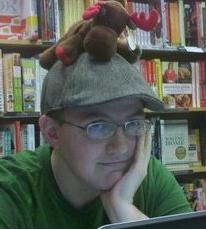
    A. F. Grappin is a general creative who mainly focuses on speculative fiction and crafting.

    ​That's me down there.

    Picture

    Archives

    June 2026
    May 2026
    April 2026
    March 2026
    February 2026
    January 2026
    December 2025
    November 2025
    October 2025
    September 2025
    August 2025
    July 2025
    June 2025
    May 2025
    April 2025
    March 2025
    February 2025
    September 2019
    September 2018
    May 2018
    March 2018
    October 2017
    August 2017
    April 2017
    November 2016
    August 2016
    October 2015
    May 2015
    March 2015
    August 2014
    May 2014
    April 2014
    March 2014
    February 2014

    Categories

    All
    Assassin
    Audiobook
    Autograph
    Balticon
    Blog Post
    Book Release
    Book Review
    Characters
    Convention
    Cover Reveal
    Creativity
    Criminal From Birth
    Editing
    Faire
    Festival
    Fiction
    Improvement
    Inspiration
    Interview
    Literature
    Luc Bertrand
    Monthly Update
    Novel
    Opinion
    Outlining
    Plans
    Progress Report
    Projects
    Public Appearance
    Quest
    Reading
    Reading List
    Real Life
    Renaissance
    Renaissance Festival
    Roleplaying
    Roll Your Desting
    Short Story
    Speculative Fiction
    Starsigns
    Status Report
    Tennessee Renaissance Festival
    The Statford Chronicles
    To-read
    Updates
    Vampire Needed
    Writing
    Writing Technique

    RSS Feed

Site powered by Weebly. Managed by Bluehost